LOCT
LOCT
Designing discipline through emotional awareness & financial commitment
Designing discipline through emotional awareness & financial commitment

ROLE - PRODUCT DESIGNER
Feature Prioritization
150+ design mockups - light/dark
Interactive Prototype
UI Kit - Dark & Light mode
STAKEHOLDERS
Abraham S. - Founder
TIMELINE
7 weeks
TIMELINE
7 weeks
COLLABORATORS
Abraham S. -
Founder
ROLE - PRODUCT DESIGNER
Feature Prioritization
150+ design mockups
Interactive Prototype
UI Kit - Dark & Light mode
"I know I should be saving for vacation, but I just had the worst day…maybe I'll stop at Target on my way home to look around*"
"I know I should be saving for vacation, but I just had the worst day…maybe I'll stop at Target on my way home to look around*"
*spend money
Background
Background
LOCT is a savings app designed to help people with impulsive spending habits build financial discipline through goal-oriented "Locks" that secure funds until a set unlock date.
LOCT is a savings app designed to help people with impulsive spending habits build financial discipline through goal-oriented "Locks" that secure funds until a set unlock date.
Challenge
Challenge
Identify which feature concepts from 60+ AI mockups would be most valuable for user & investors
The core "Lock" mechanism intentionally restricts access to funds, requiring careful design to feel transparent & empowering rather than severe
Identify which feature concepts from 60+ AI mockups would be most valuable for user & investors
The core "Lock" mechanism intentionally restricts access to funds, requiring careful design to feel transparent & empowering rather than severe
Plan
Plan
Prioritize features essential for the MVP, design user flows for core functionality, & create a complete UI kit to ensure scalability & consistency.
Prioritize features essential for the MVP, design user flows for core functionality, & create a complete UI kit to ensure scalability & consistency.
Goal
Goal
Deliver a polished, interactive prototype that effectively communicates the founder's vision to potential investors while demonstrating the app's discipline-building value proposition.
Deliver a polished, interactive prototype that effectively communicates the founder's vision to potential investors while demonstrating the app's discipline-building value proposition.
Constraints
Constraints
Speed was critical
Speed was critical
The goal of the project was to establish a proof of concept strong enough to present to investors, which meant skipping formal research & validation in favor of speed. User testing & iterative refinement would come later, once the concept had funding & momentum.
The goal of the project was to establish a proof of concept strong enough to present to investors, which meant skipping formal research & validation in favor of speed. User testing & iterative refinement would come later, once the concept had funding & momentum.
The goal of the project was to establish a proof of concept strong enough to present to investors, which meant skipping formal research & validation in favor of speed. User testing & iterative refinement would come later, once the concept had funding & momentum.
Starting point
Starting point
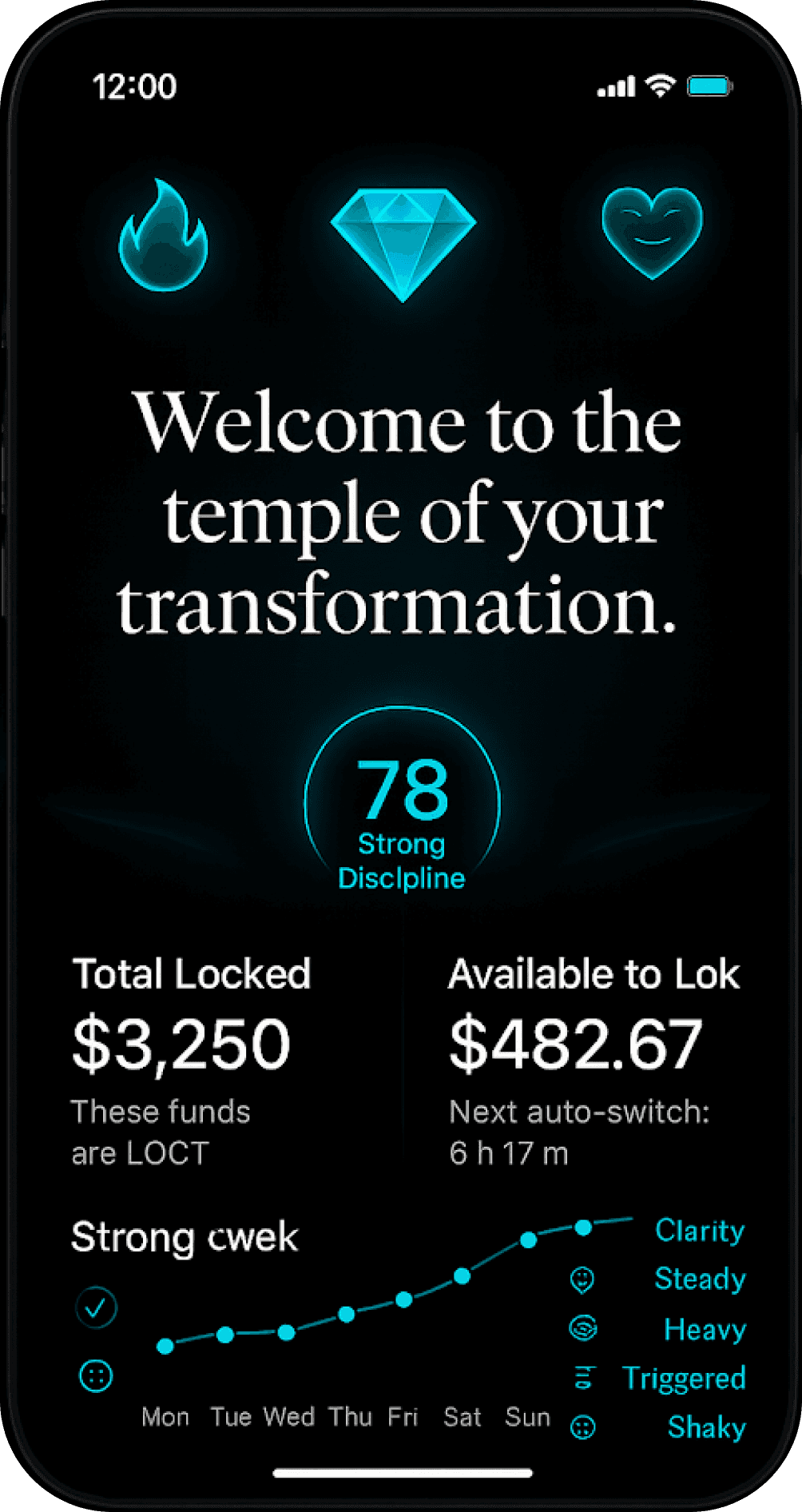
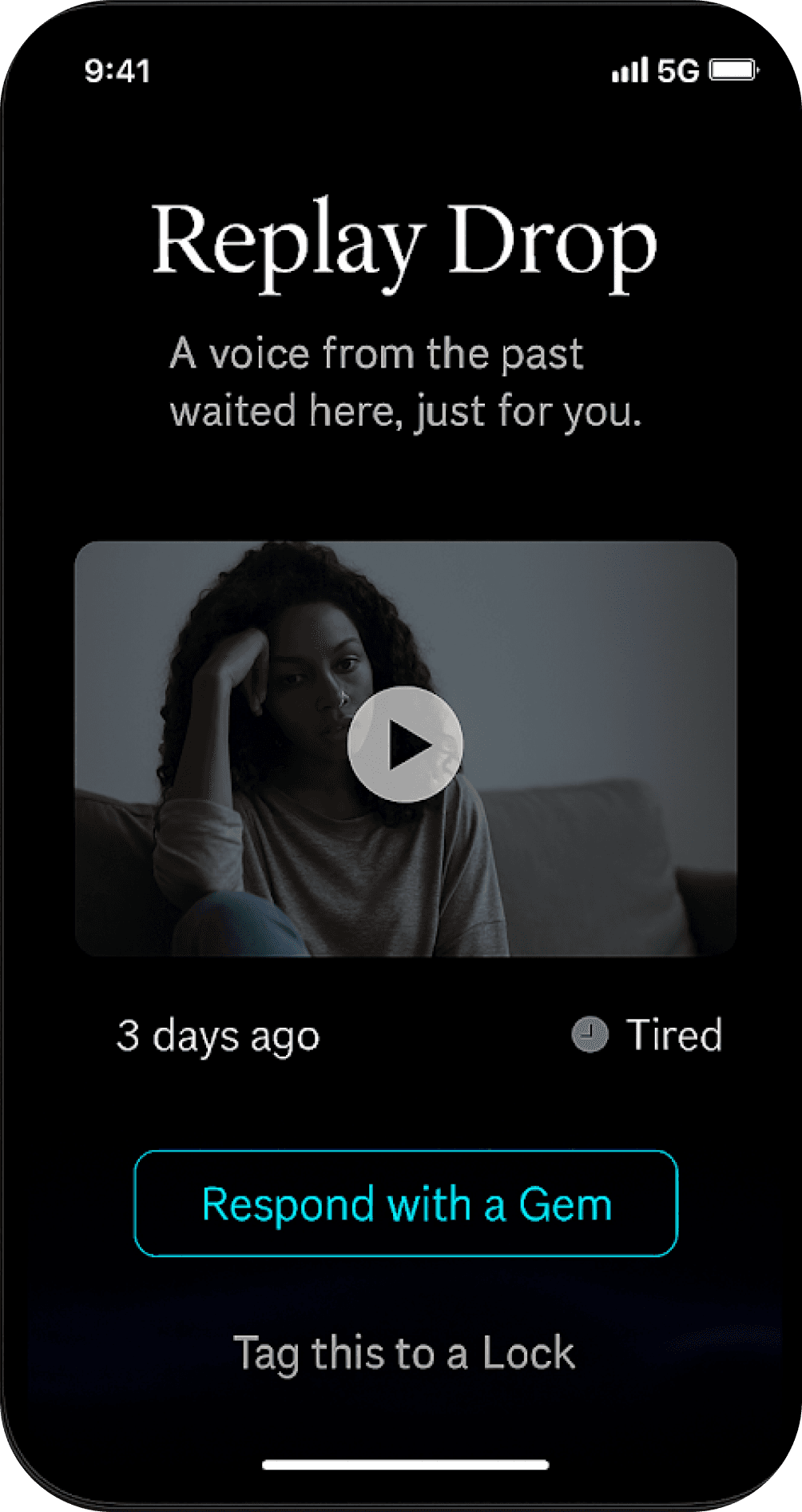
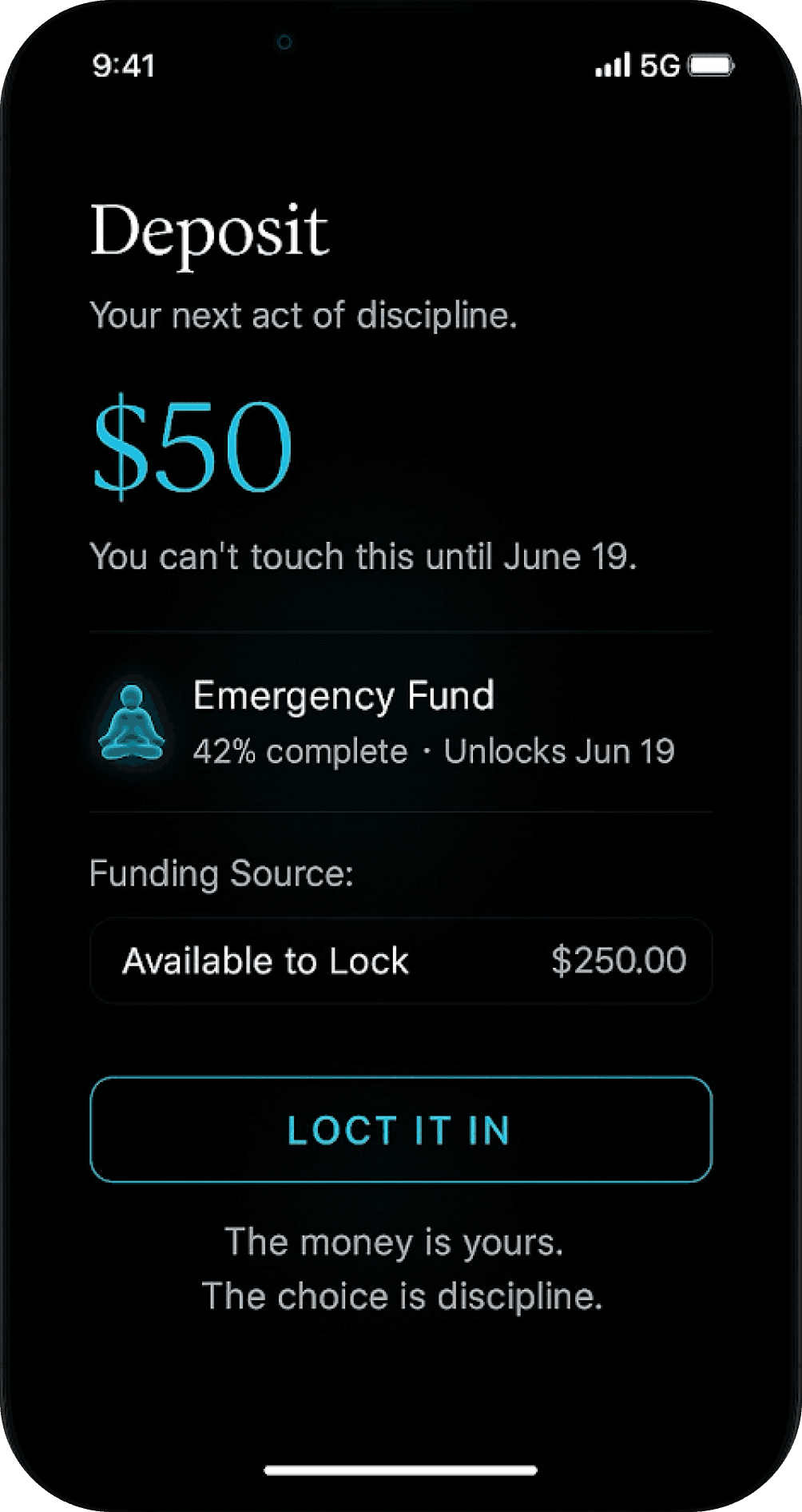
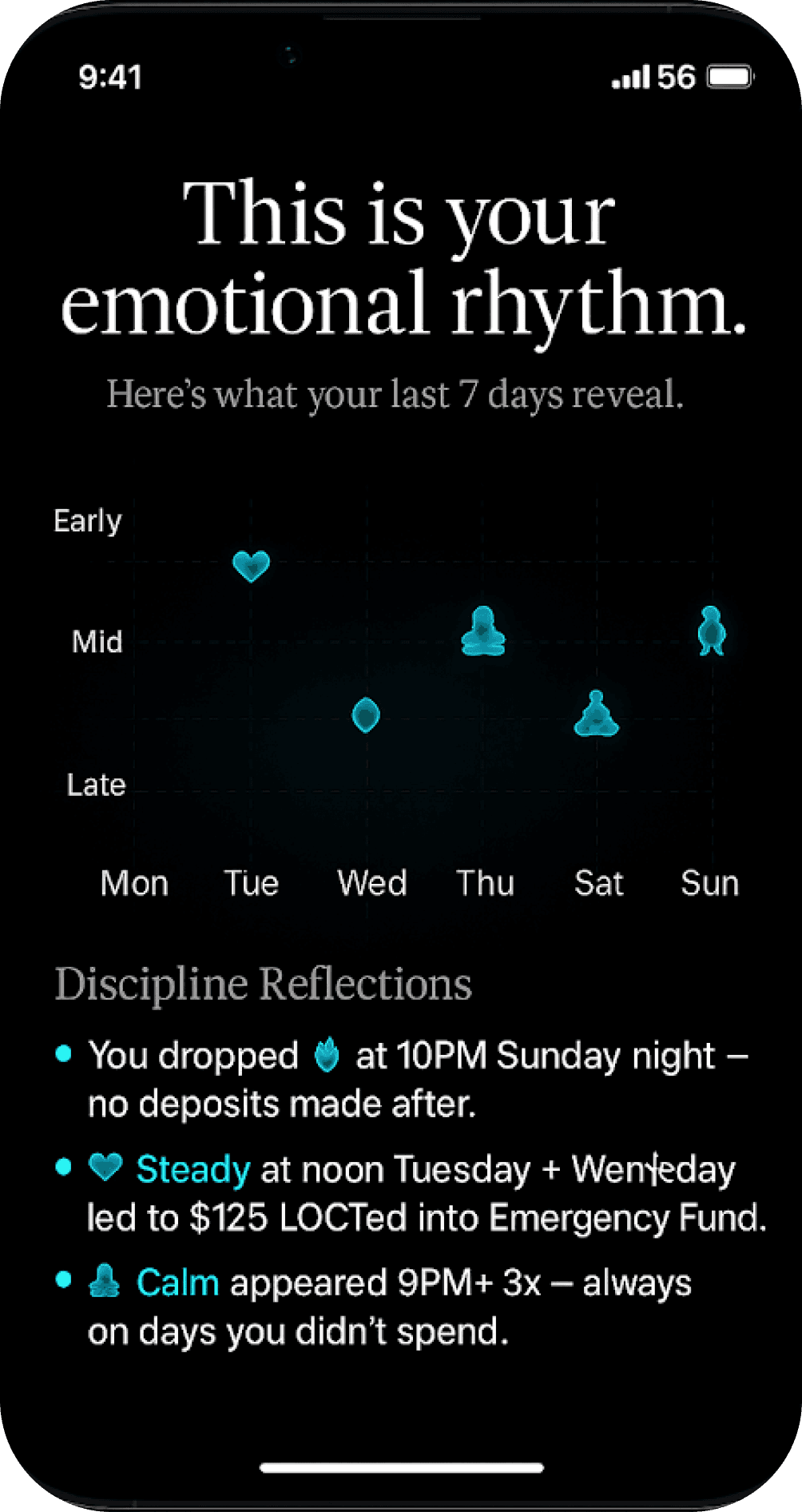
To kick things off, I spent some time analyzing over 60 AI mockups to identify where the foundation was strong & where it might need refinement. I noticed that in addition to the core Lock feature, the concept also centered around logging spending triggers to help users build emotional awareness around money.
To kick things off, I spent some time analyzing over 60 AI mockups to identify where the foundation was strong & where it might need refinement. I noticed that in addition to the core Lock feature, the concept also centered around logging spending triggers to help users build emotional awareness around money.
To kick things off, I spent some time analyzing over 60 AI mockups to identify where the foundation was strong & where it might need refinement. I noticed that in addition to the core Lock feature, the concept also centered around logging spending triggers to help users build emotional awareness around money.
Initial observations
Initial observations
Language that might not resonate broadly
Feature names that needed clarification
Opportunities to strengthen visual hierarchy
Information architecture to define
Beyond these observations was a deeper design challenge, in that the core "Lock" mechanism intentionally restricted users from accessing their funds until a set date or goal was met. The key would be to clearly articulate this constraint in a way that felt transparent to users & compelling to investors, demonstrating that the friction was purposeful rather than punishment.
Beyond these observations was a deeper design challenge, in that the core "Lock" mechanism intentionally restricted users from accessing their funds until a set date or goal was met. The key would be to clearly articulate this constraint in a way that felt transparent to users & compelling to investors, demonstrating that the friction was purposeful rather than punishment.
Beyond these observations was a deeper design challenge, in that the core "Lock" mechanism intentionally restricted users from accessing their funds until a set date or goal was met. The key would be to clearly articulate this constraint in a way that felt transparent to users & compelling to investors, demonstrating that the friction was purposeful rather than punishment.
Shaping the MVP
Shaping the MVP
Prioritizing features
Prioritizing features
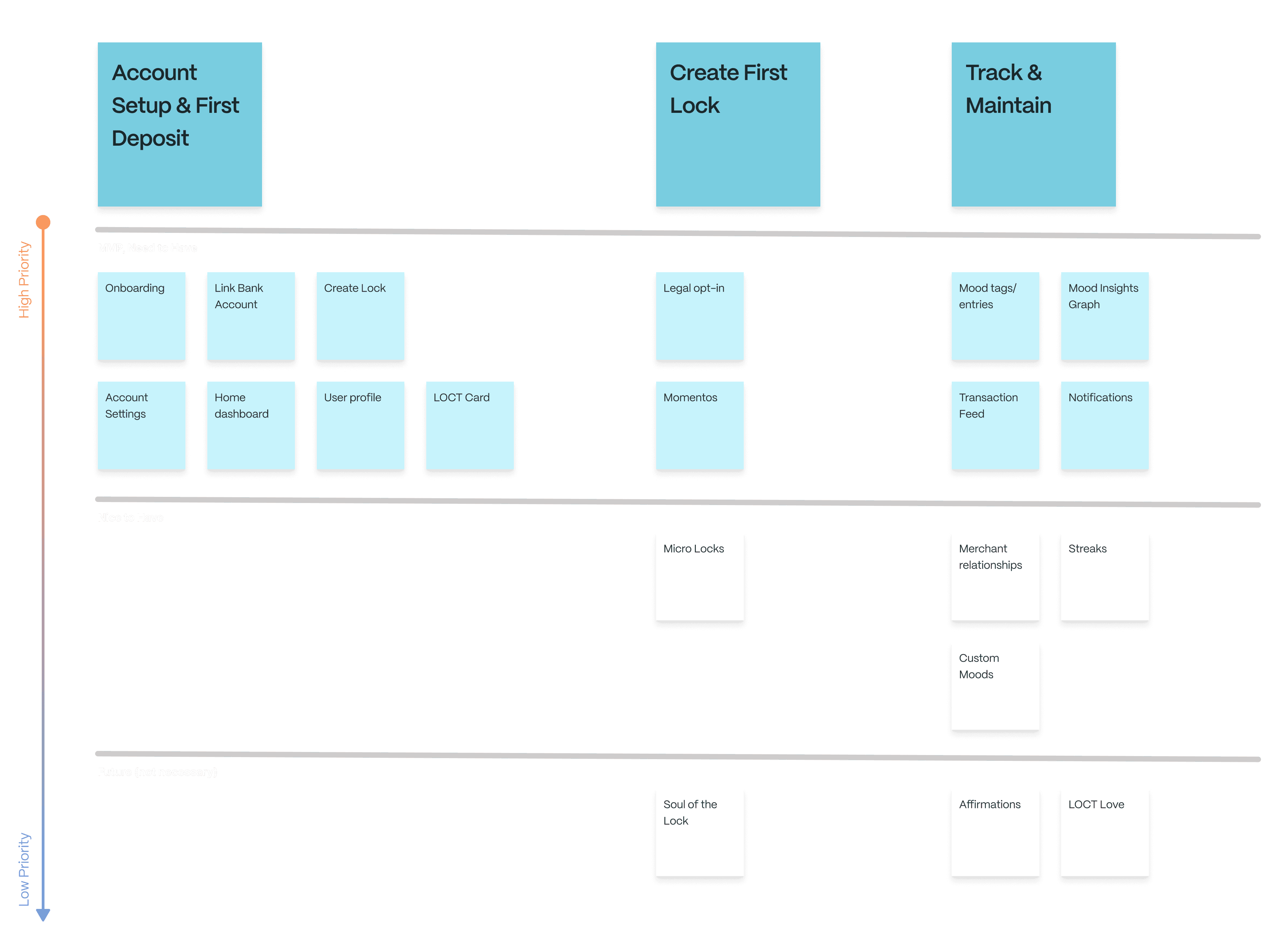
To help us stay focused on the app's core value proposition, I created a feature prioritization matrix that mapped the core user flow with the 20+ features in the brief. This exercise gave us perspective on what was actually vital for users & investors. We agreed to save several ideas (like Streaks & Micro Locks) for V2, allowing the MVP to focus on proving the discipline-building concept first.
To help us stay focused on the app's core value proposition, I created a feature prioritization matrix that mapped the core user flow with the 20+ features in the brief. This exercise gave us perspective on what was actually vital for users & investors. We agreed to save several ideas (like Streaks & Micro Locks) for V2, allowing the MVP to focus on proving the discipline-building concept first.
To help us stay focused on the app's core value proposition, I created a feature prioritization matrix that mapped the core user flow with the 20+ features in the brief. This exercise gave us perspective on what was actually vital for users & investors. We agreed to save several ideas (like Streaks & Micro Locks) for V2, allowing the MVP to focus on proving the discipline-building concept first.
Bringing clarity to navigation
Bringing clarity to navigation
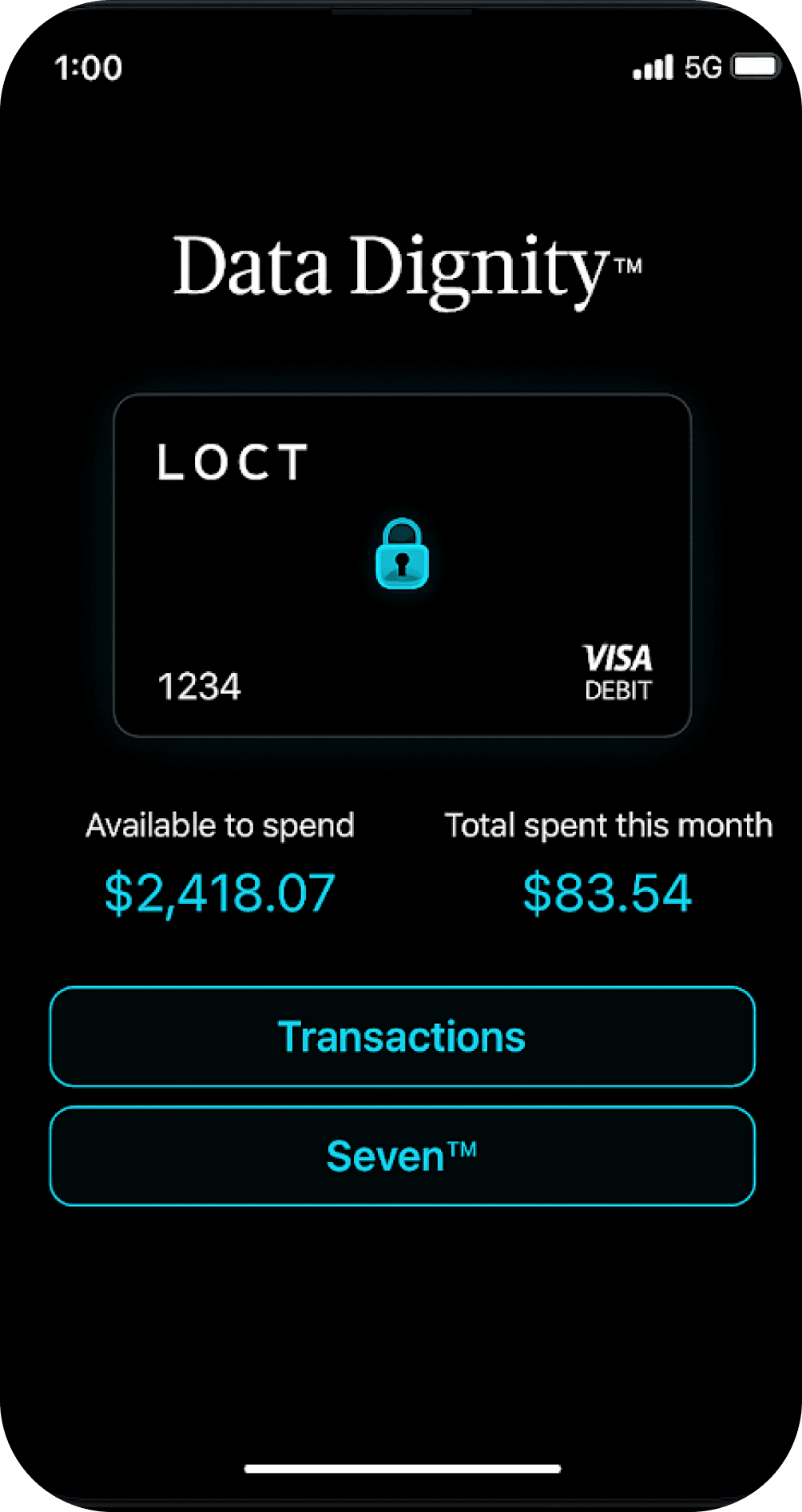
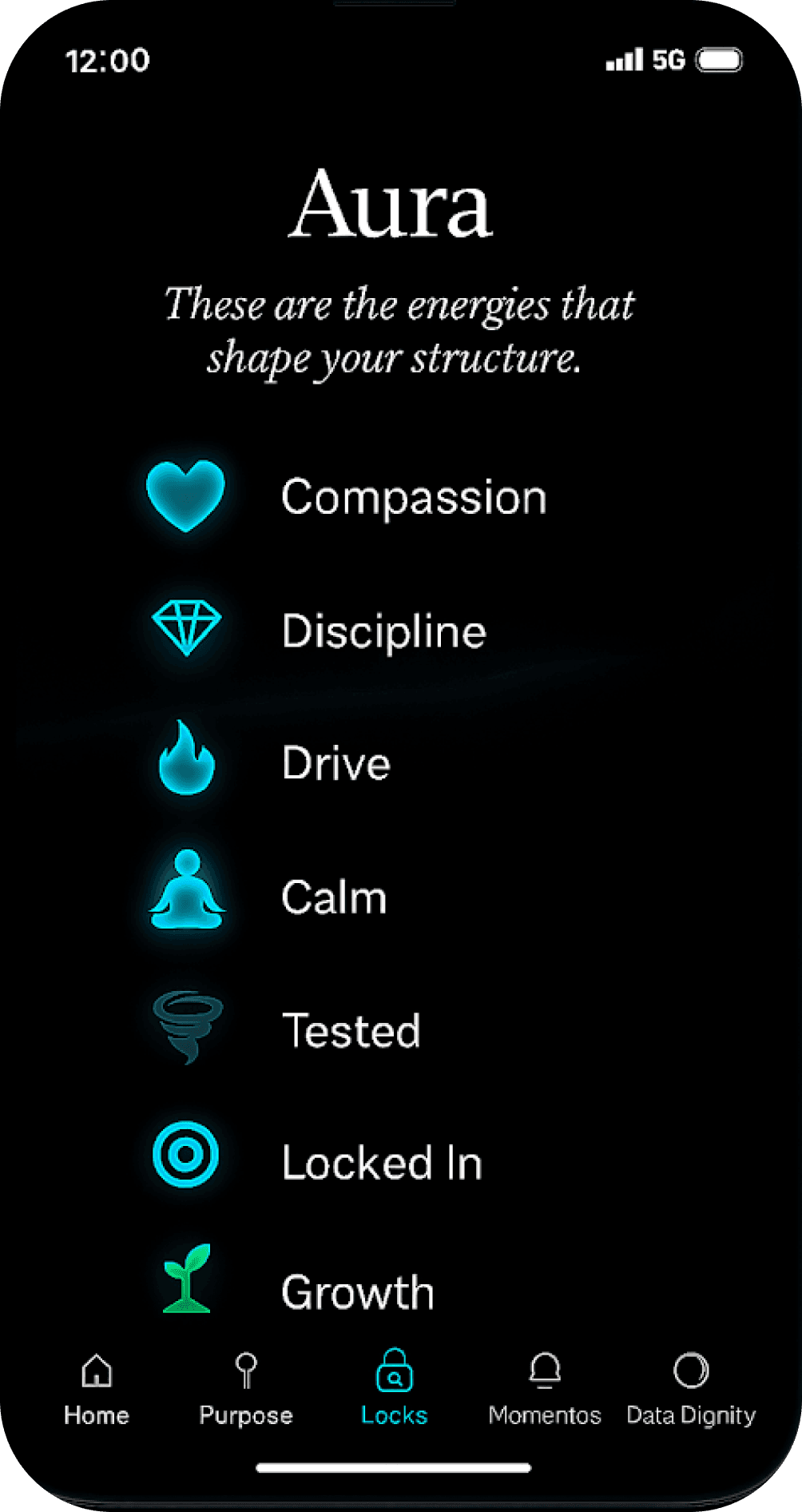
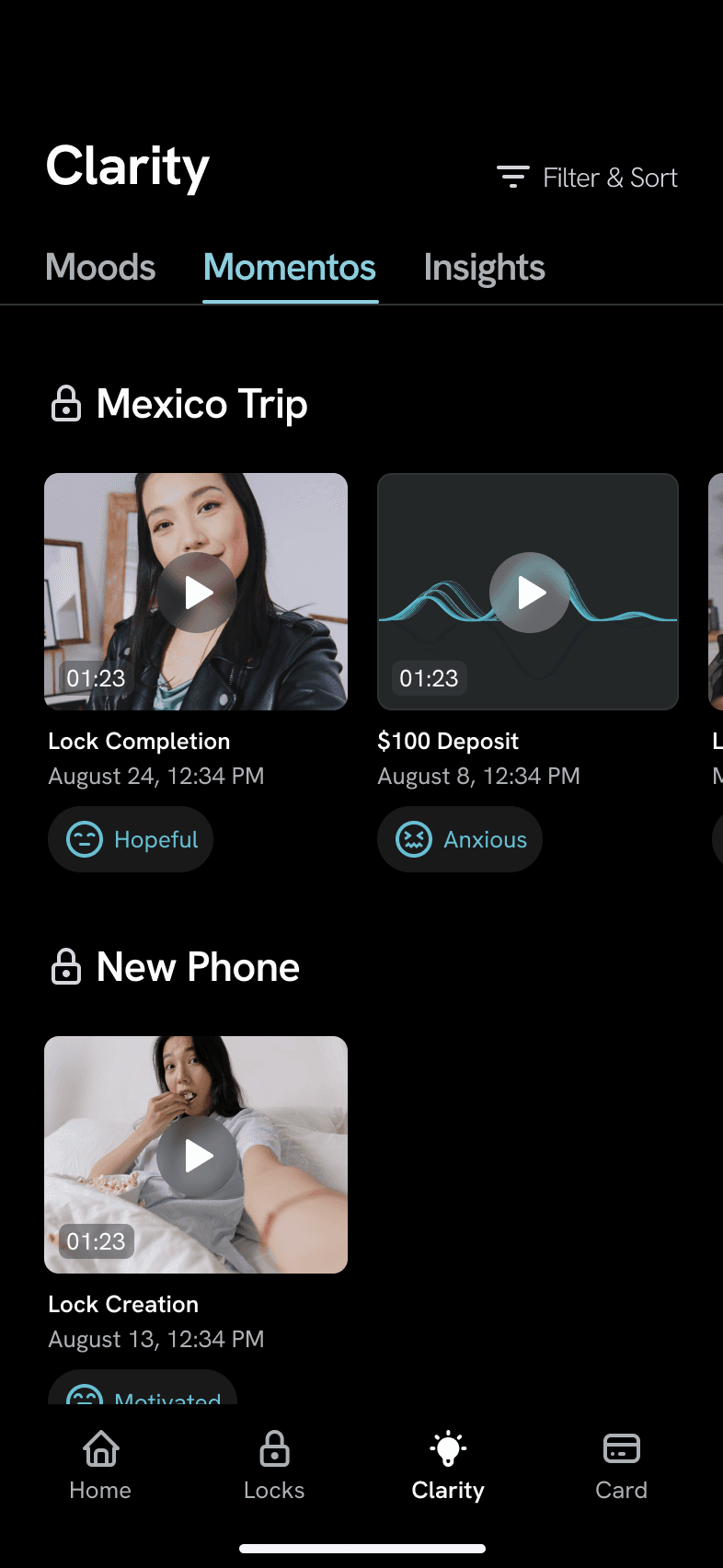
I simplified the information architecture by consolidating related content & clarifying vague terminology. I moved the standalone "Momentos" tab (user-generated video & audio recordings) into the newly renamed Clarity Tab, creating a dedicated space for emotional awareness alongside mood logs & insights. I also renamed "Data Dignity" to Card, making it immediately obvious where users would find their LOCT Card & transaction history. This simpler 4-tab structure helps users find what they need faster.
I simplified the information architecture by consolidating related content & clarifying vague terminology. I moved the standalone "Momentos" tab (user-generated video & audio recordings) into the newly renamed Clarity Tab, creating a dedicated space for emotional awareness alongside mood logs & insights. I also renamed "Data Dignity" to Card, making it immediately obvious where users would find their LOCT Card & transaction history. This simpler 4-tab structure helps users find what they need faster.
I simplified the information architecture by consolidating related content & clarifying vague terminology. I moved the standalone "Momentos" tab (user-generated video & audio recordings) into the newly renamed Clarity Tab, creating a dedicated space for emotional awareness alongside mood logs & insights. I also renamed "Data Dignity" to Card, making it immediately obvious where users would find their LOCT Card & transaction history. This simpler 4-tab structure helps users find what they need faster.

Before

After
Making friction feel fair
Making friction feel fair
The vision for the Locks feature was clear: no early withdrawal to preserve the app's discipline-building purpose. However, I explored a few alternative approaches that could maintain friction & accountability while offering users additional safety nets.
The vision for the Locks feature was clear: no early withdrawal to preserve the app's discipline-building purpose. However, I explored a few alternative approaches that could maintain friction & accountability while offering users additional safety nets.
Alternative approaches:
Alternative approaches:
Assigned "key holders" to approve withdrawals
Early withdrawal fees
36hr waiting period to receive funds
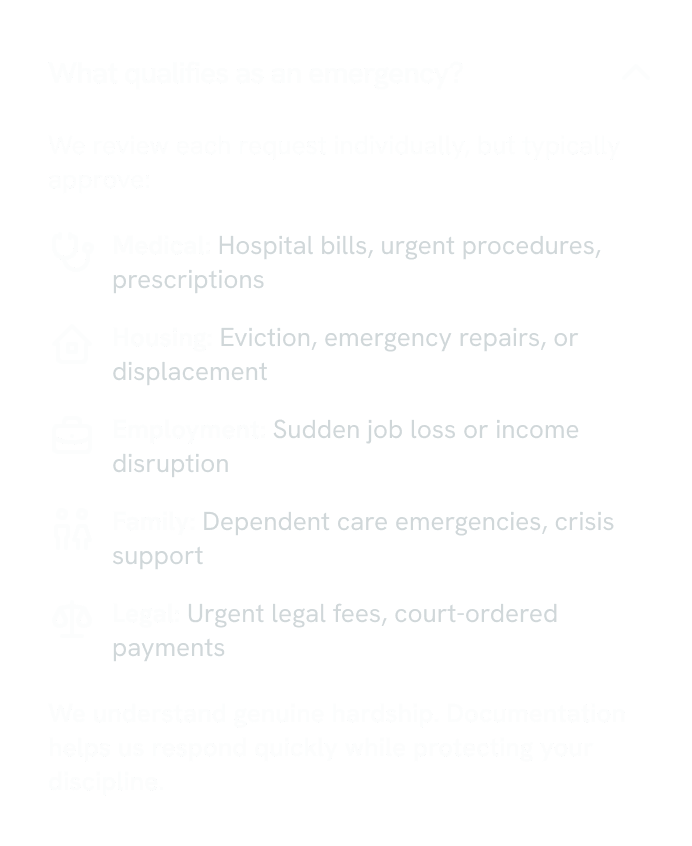
After discussion, we agreed on a middle ground where users could withdraw early by providing documentation proving they need the funds for emergencies. This solution honored the founder's commitment to discipline while acknowledging that life happens & users need to feel their money is accessible when truly necessary.
After discussion, we agreed on a middle ground where users could withdraw early by providing documentation proving they need the funds for emergencies. This solution honored the founder's commitment to discipline while acknowledging that life happens & users need to feel their money is accessible when truly necessary.
Bringing LOCT To Life
Bringing LOCT To Life
Discipline that sticks
Discipline that sticks
Discipline that sticks
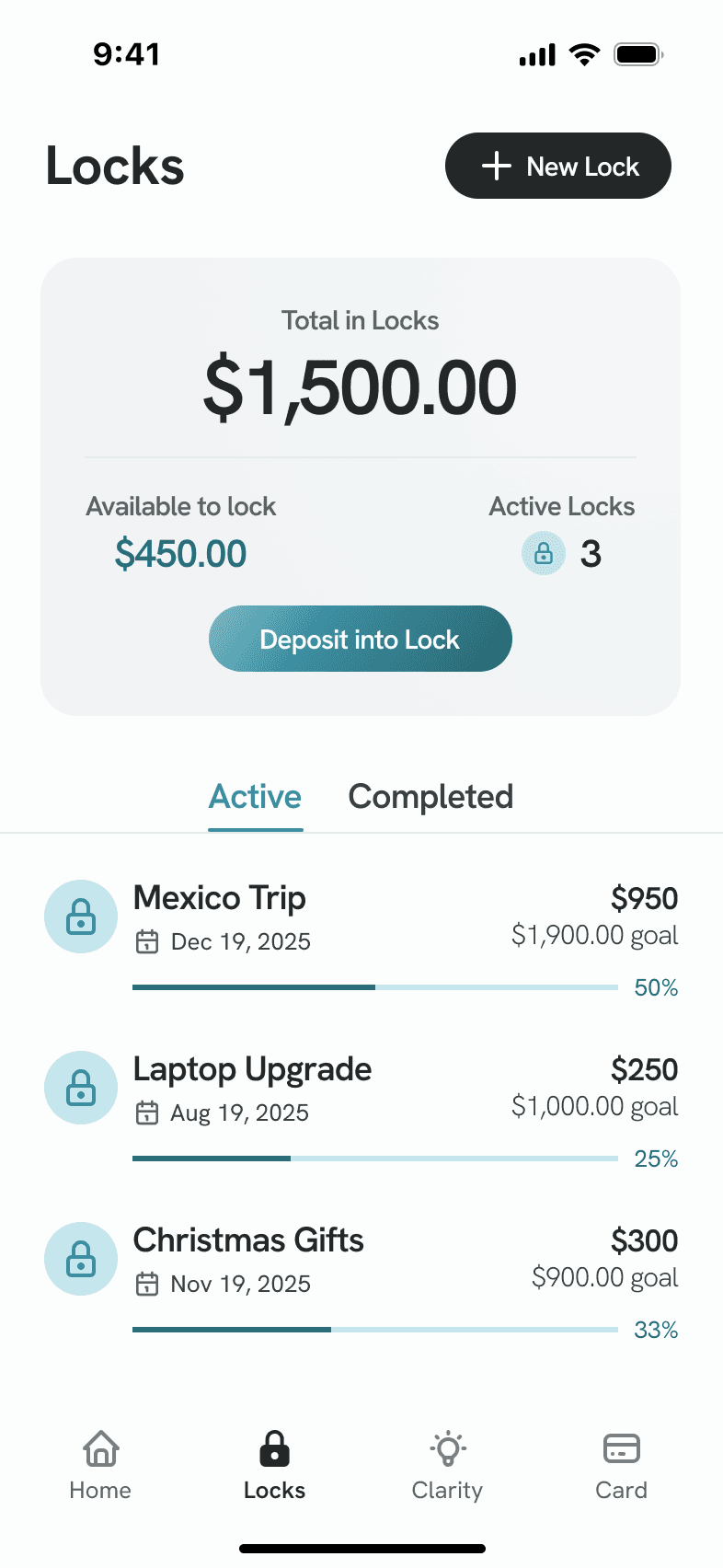
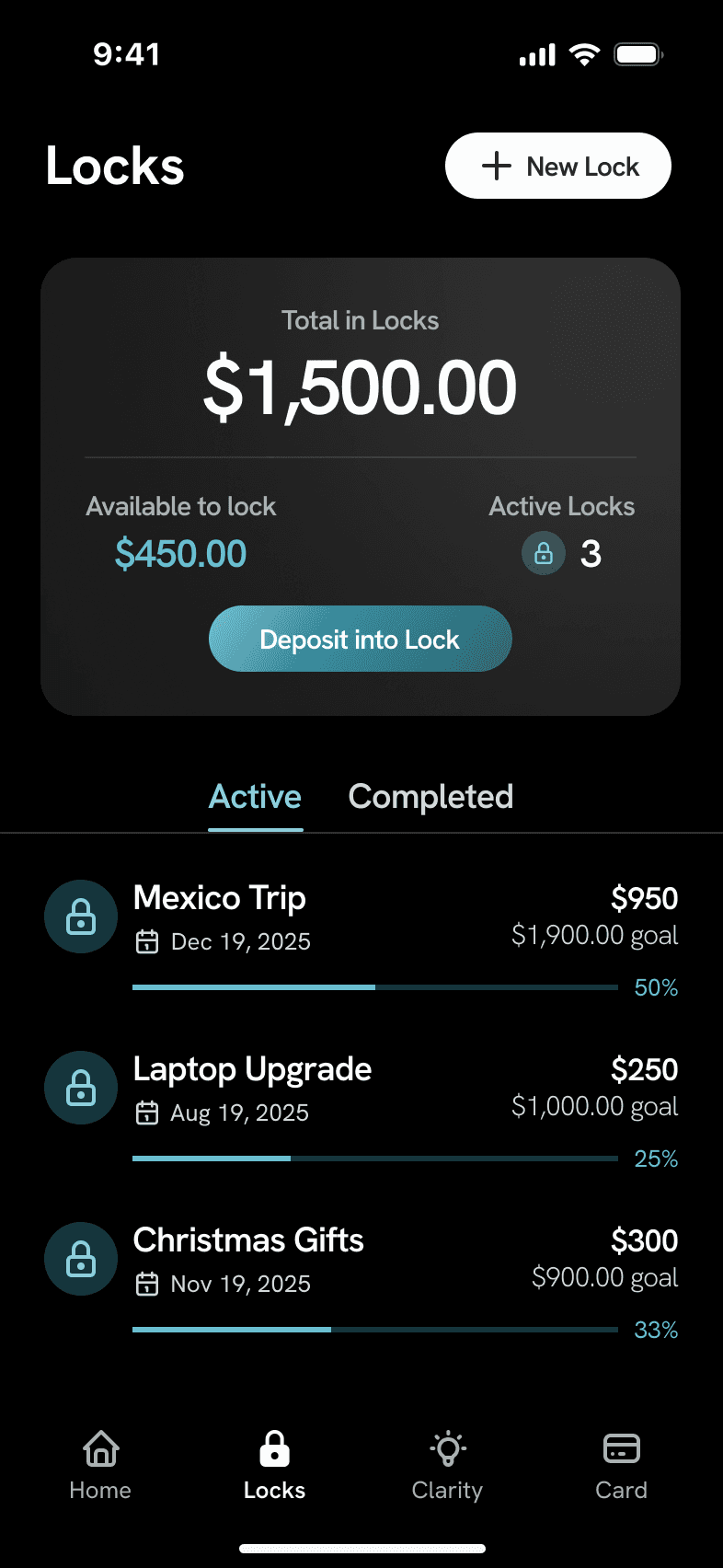
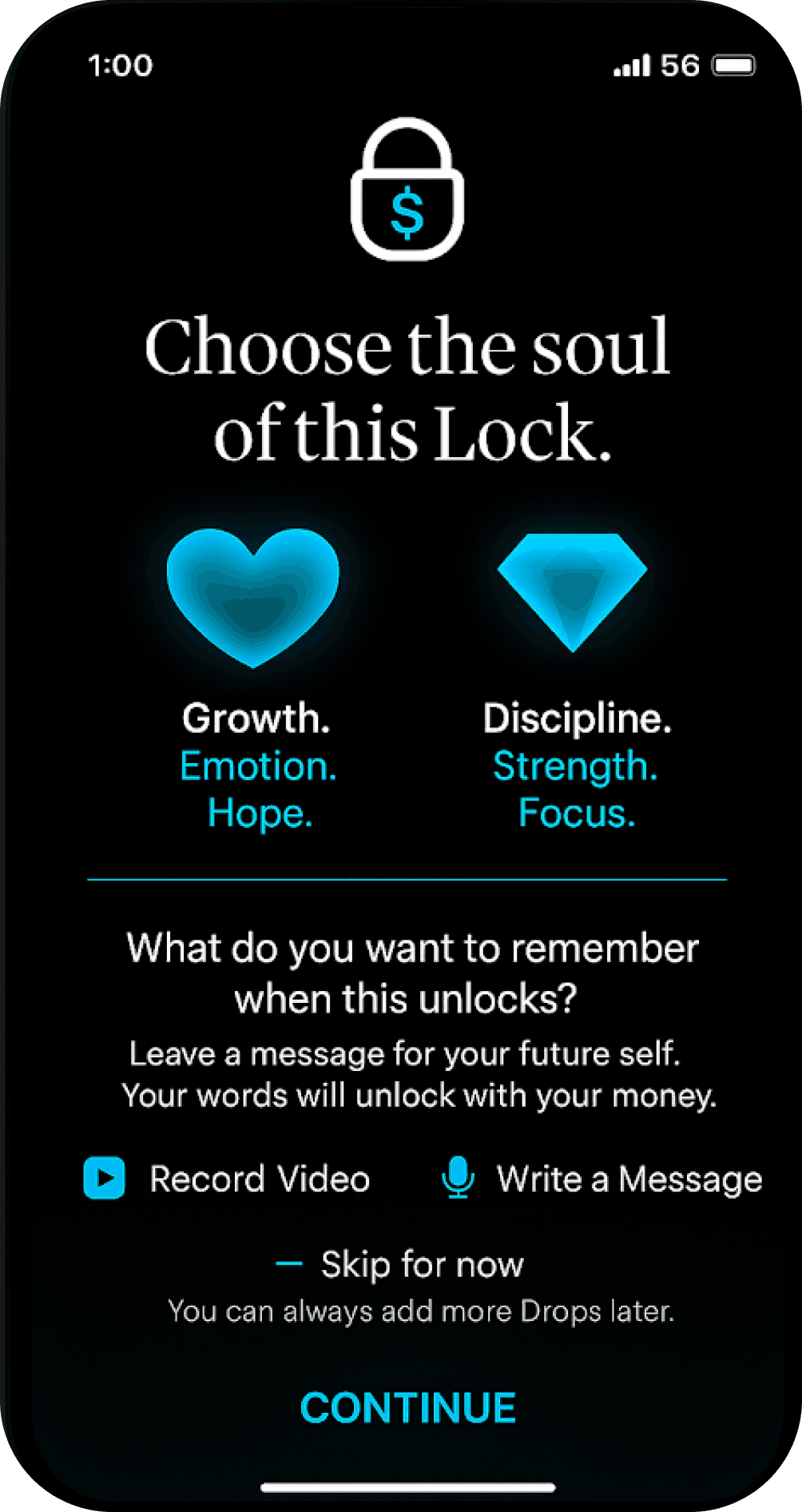
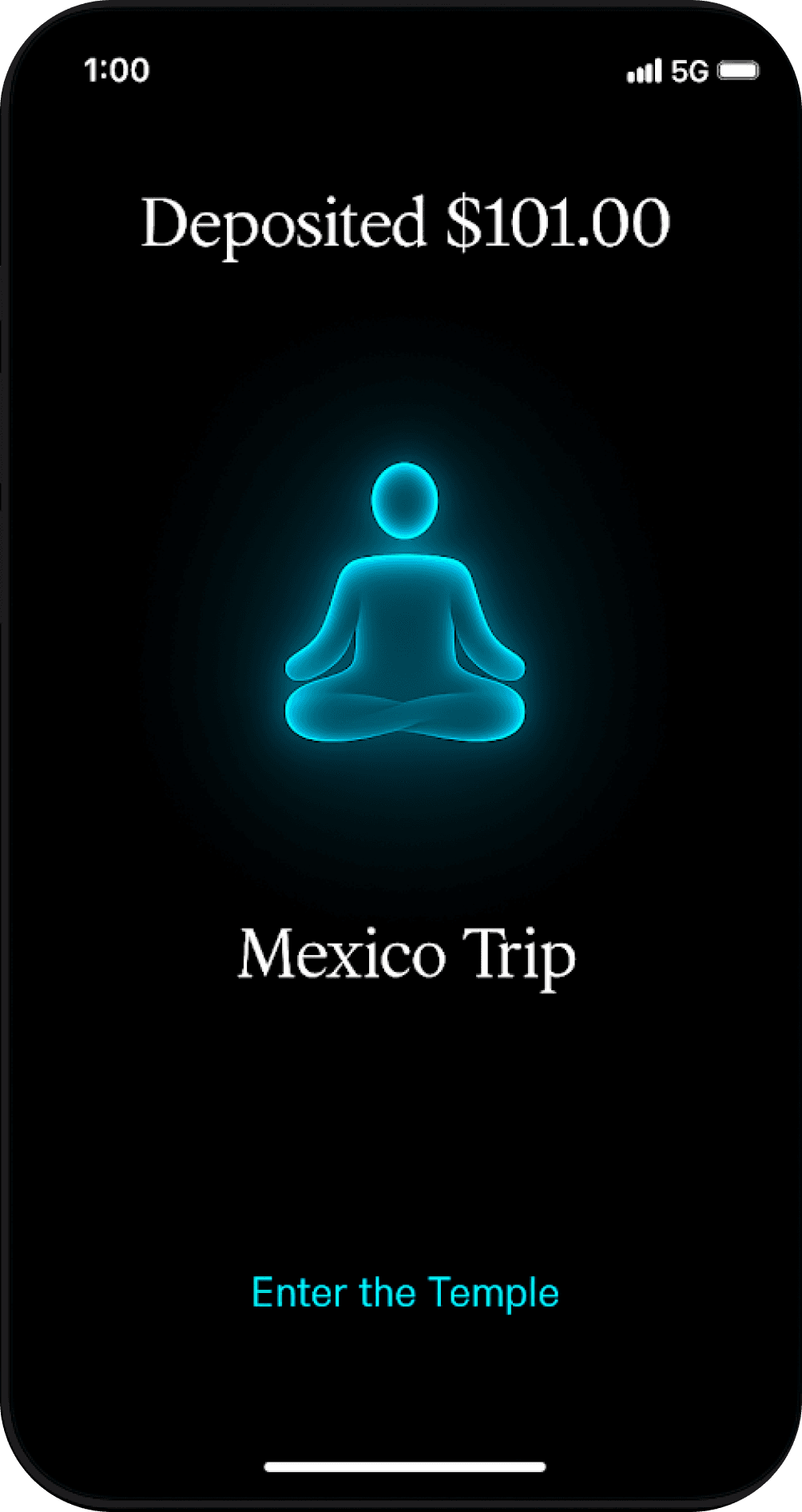
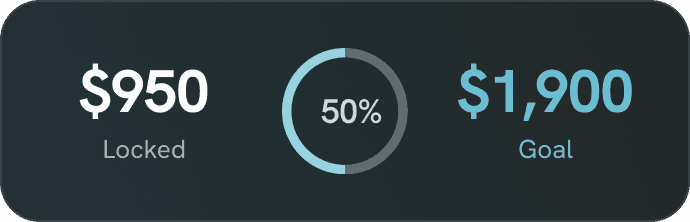
Saving for meaningful goals is hard when temptation is always one tap away, leaving users frustrated by their own lack of follow-through. Locks make funds completely inaccessible until a target date or goal is met, with a creation flow designed to be emotionally intentional by giving users the option to record a message for themselves, helping them feel proud for taking the step to save for their futures.
Saving for meaningful goals is hard when temptation is always one tap away, leaving users frustrated by their own lack of follow-through. Locks make funds completely inaccessible until a target date or goal is met, with a creation flow designed to be emotionally intentional by giving users the option to record a message for themselves, helping them feel proud for taking the step to save for their futures.
Saving for meaningful goals is hard when temptation is always one tap away, leaving users frustrated by their own lack of follow-through. Locks make funds completely inaccessible until a target date or goal is met, with a creation flow designed to be emotionally intentional by giving users the option to record a message for themselves, helping them feel proud for taking the step to save for their futures.
Transparency is key for trust
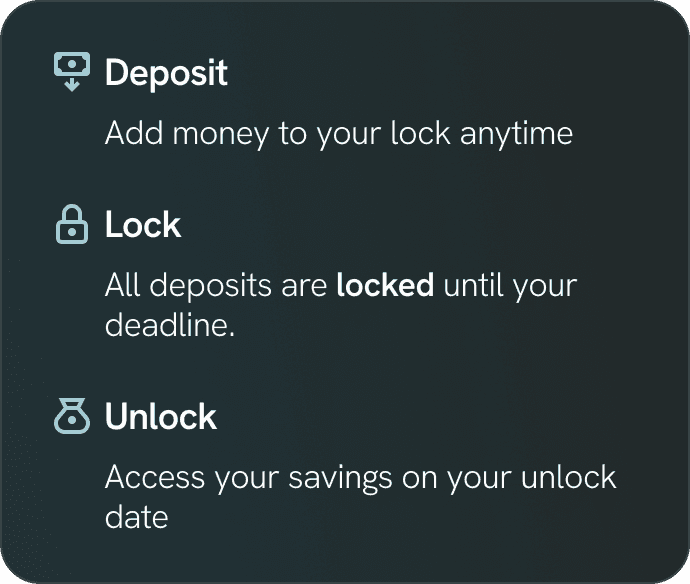
I outlined exactly what "locked" means so users understand what they're committing to before they lock anything away, building trust that they're choosing discipline rather than trapping themselves.
Transparency is key for trust
I outlined exactly what "locked" means so users understand what they're committing to before they lock anything away, building trust that they're choosing discipline rather than trapping themselves.
From impulse to awareness
From impulse to awareness
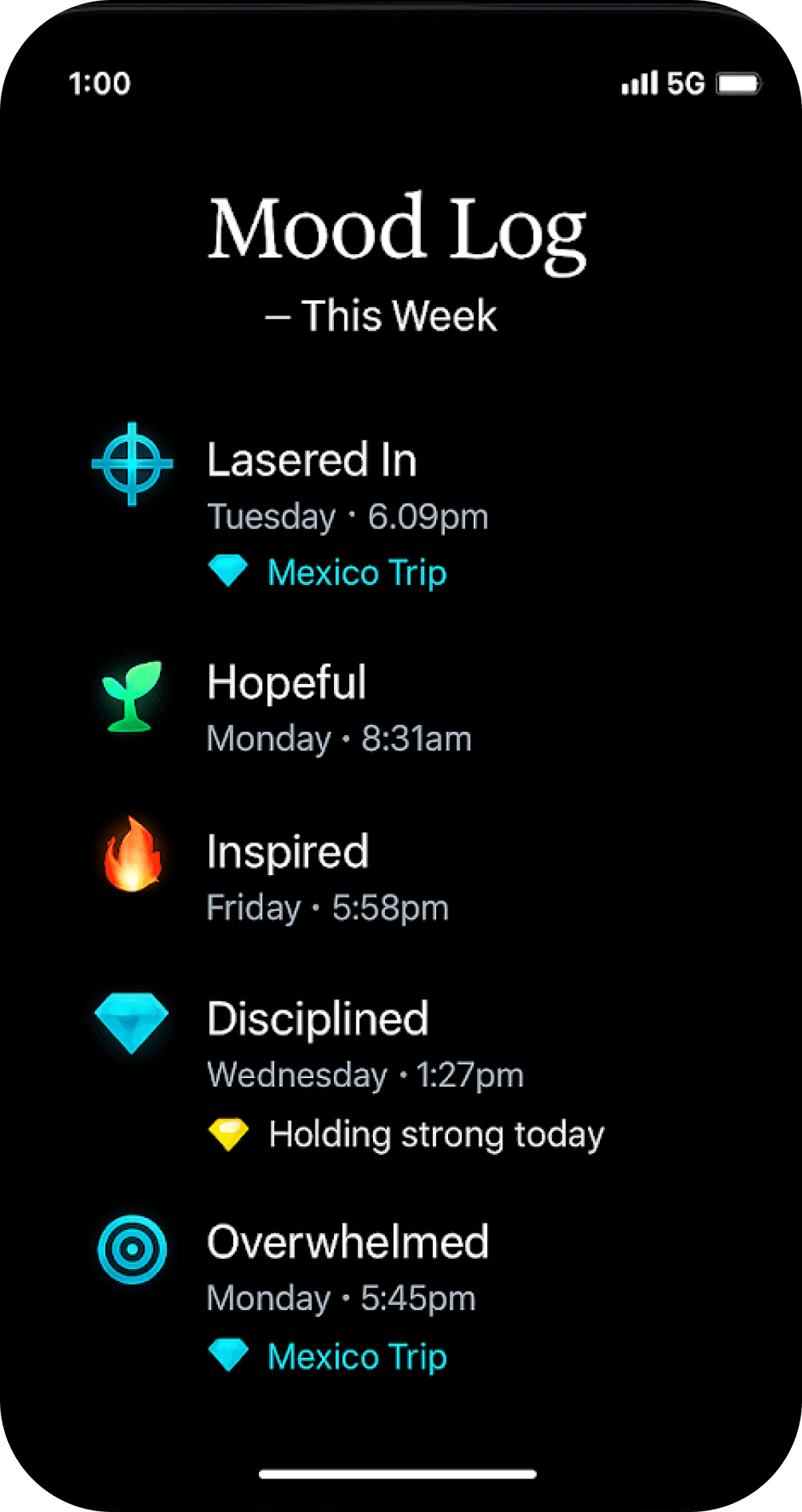
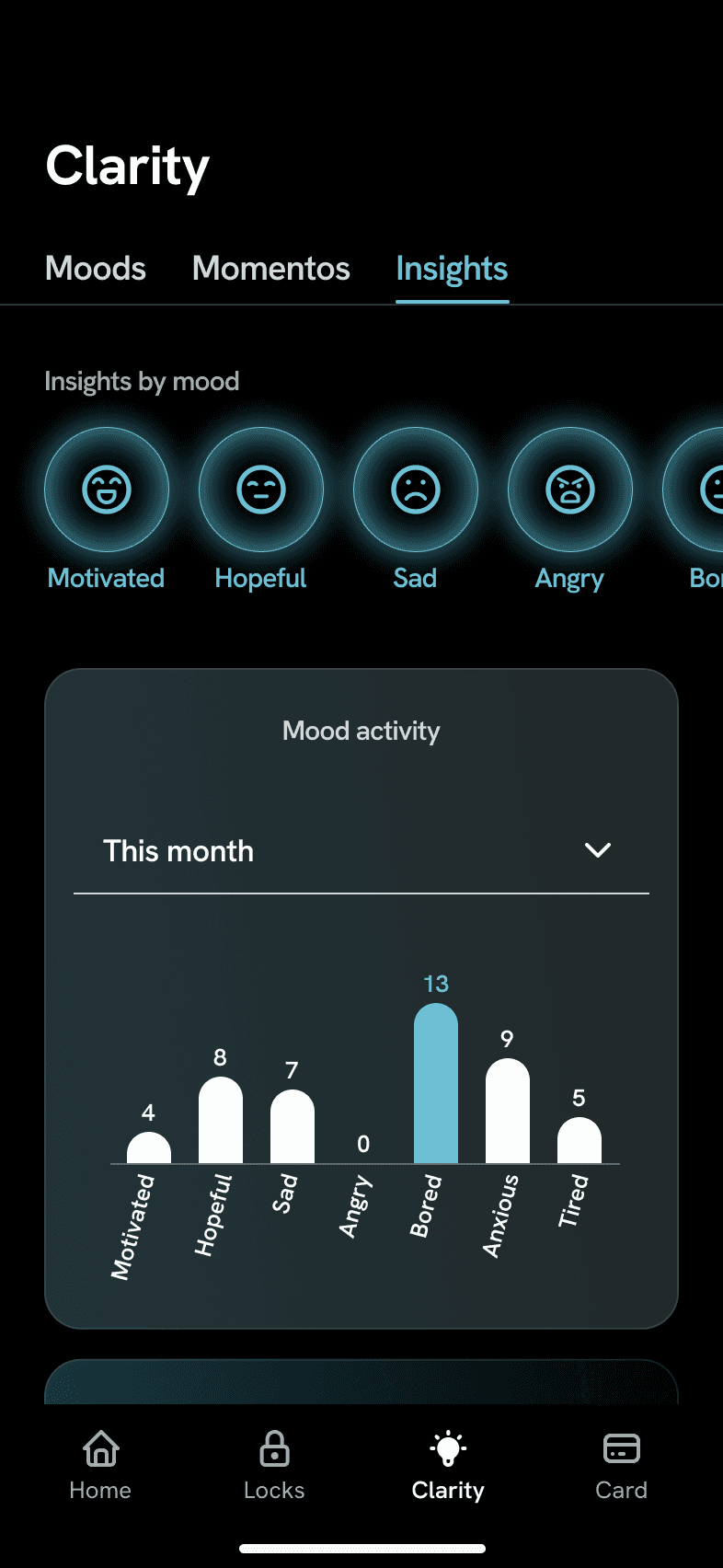
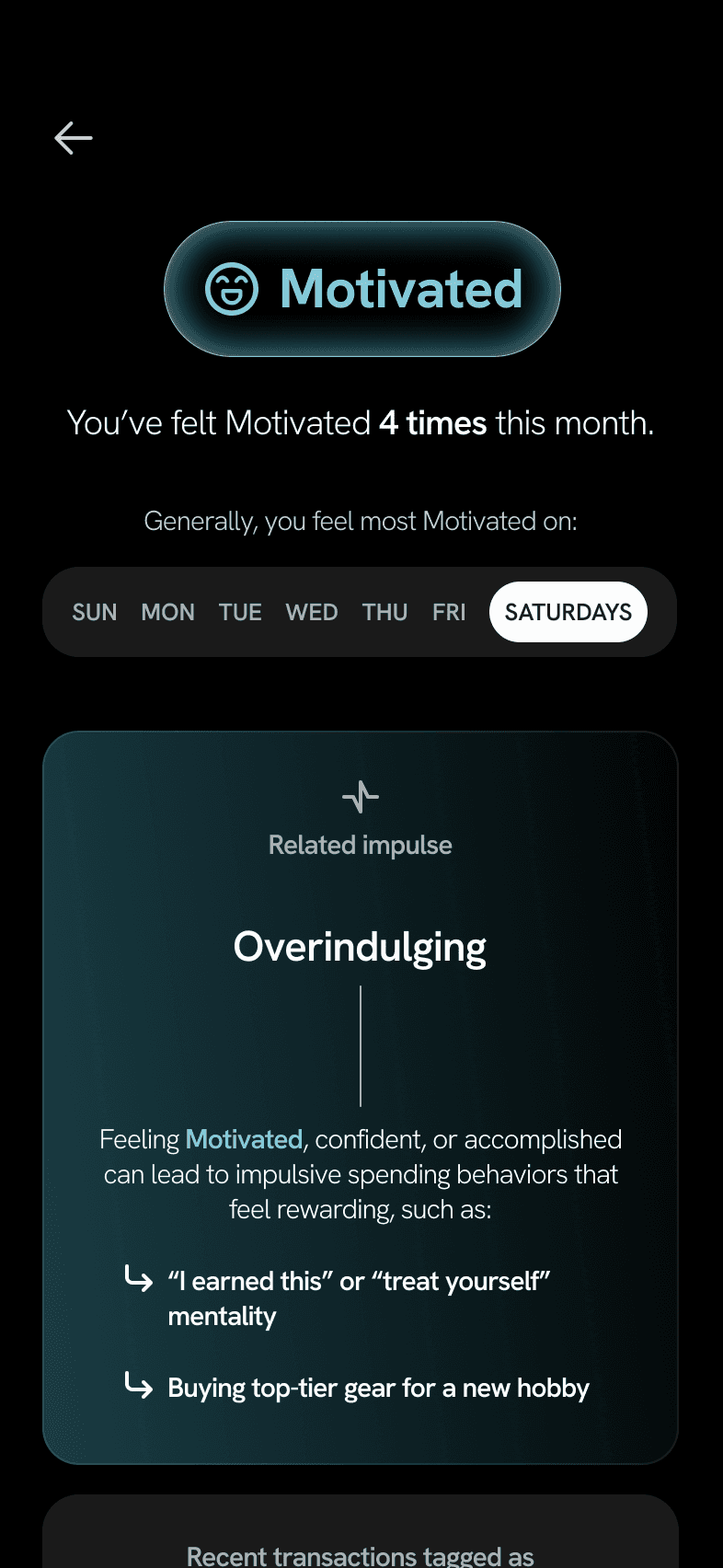
Impulsive spending often happens unconsciously, driven by emotional triggers people don't recognize in the moment. Using the mood-tagging system, users can log how they're feeling during transactions & capture thoughts in short journal-style entries. Over time they can see mood patterns that lead to impulsive decisions & build the self-awareness needed to break the cycle.
Impulsive spending often happens unconsciously, driven by emotional triggers people don't recognize in the moment. Using the mood-tagging system, users can log how they're feeling during transactions & capture thoughts in short journal-style entries. Over time they can see mood patterns that lead to impulsive decisions & build the self-awareness needed to break the cycle.
Impulsive spending often happens unconsciously, driven by emotional triggers people don't recognize in the moment. Using the mood-tagging system, users can log how they're feeling during transactions & capture thoughts in short journal-style entries. Over time they can see mood patterns that lead to impulsive decisions & build the self-awareness needed to break the cycle.
View Light Mode
View Light Mode
I'd previously designed a Mood Check-in flow that felt a bit hollow, so I used Figma Make to ideate on more dynamic layouts by feeding it a concise PRD of the feature.
I'd previously designed a Mood Check-in flow that felt a bit hollow, so I used Figma Make to ideate on more dynamic layouts by feeding it a concise PRD of the feature.
I'd previously designed a Mood Check-in flow that felt a bit hollow, so I used Figma Make to ideate on more dynamic layouts by feeding it a concise PRD of the feature.
Previous iteration
Previous iteration
Figma Make brainstorm
Building momentum without overwhelm
Building momentum without overwhelm
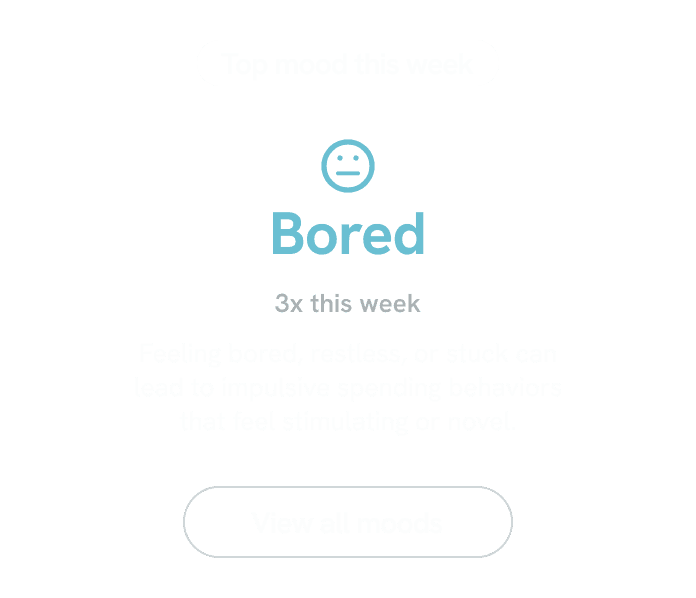
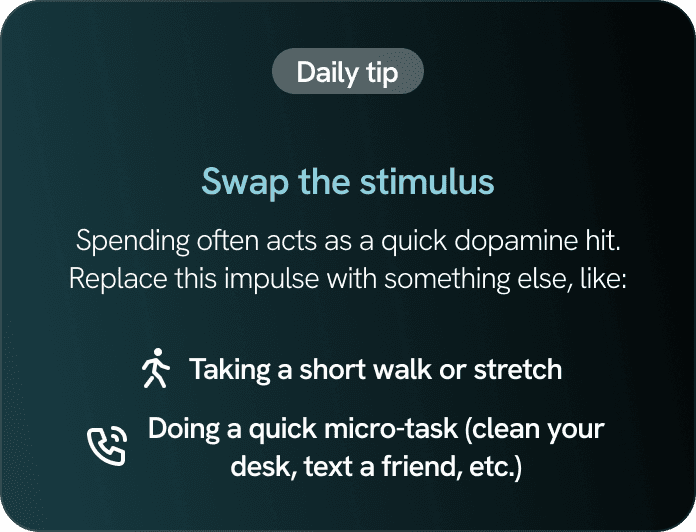
Without regular check-ins, it's easy to lose sight of financial goals & fall back into old habits. The Home tab functions as a command center that surfaces active Locks, progress tracking, daily tips, & mood insights. As users engage with the app, their Home tab adapts to show what's most relevant to them in their financial journey, supporting their momentum without creating decision fatigue.
Without regular check-ins, it's easy to lose sight of financial goals & fall back into old habits. The Home tab functions as a command center that surfaces active Locks, progress tracking, daily tips, & mood insights. As users engage with the app, their Home tab adapts to show what's most relevant to them in their financial journey, supporting their momentum without creating decision fatigue.
Without regular check-ins, it's easy to lose sight of financial goals & fall back into old habits. The Home tab functions as a command center that surfaces active Locks, progress tracking, daily tips, & mood insights. As users engage with the app, their Home tab adapts to show what's most relevant to them in their financial journey, supporting their momentum without creating decision fatigue.
Outcomes
Outcomes
Making AI outputs more human
Making AI outputs more human
I transformed the scattered AI mockups into a viable product by connecting the dots between isolated screens & defining how users would actually move through the app, establishing consistent patterns that made the experience feel like a unified system.
I transformed the scattered AI mockups into a viable product by connecting the dots between isolated screens & defining how users would actually move through the app, establishing consistent patterns that made the experience feel like a unified system.
I transformed the scattered AI mockups into a viable product by connecting the dots between isolated screens & defining how users would actually move through the app, establishing consistent patterns that made the experience feel like a unified system.
The path forward
The path forward
Real users need to interact with these flows to reveal what's working & what isn't. Along with interviews to refine who this product actually serves, comprehensive research should happen to validate if people will actually trust an app that locks their money away.
Real users need to interact with these flows to reveal what's working & what isn't. Along with interviews to refine who this product actually serves, comprehensive research should happen to validate if people will actually trust an app that locks their money away.
Real users need to interact with these flows to reveal what's working & what isn't. Along with interviews to refine who this product actually serves, comprehensive research should happen to validate if people will actually trust an app that locks their money away.
"You took my crazy ideas & turned them into something I feel great about showing to investors"
"You took my crazy ideas & turned them into something I feel great about showing to investors"

Abraham S.
Founder
Before Coffee
Karicell
Captain's Log
Other projects
Before Coffee
Karicell
Captain's Log
Other projects
Other projects
Before Coffee
Captain's Log