
01 - The problem: when money meets friendship
"I hate having to bug my roommates for rent, it's annoying & awkward."
This quote from a friend inspired me to look deeper into a common frustration: the awkwardness of splitting recurring expenses like rent & utilities with roommates. Most of my peers are familiar or use with Venmo for quick transactions, so much so that "Venmo-ing" someone has become ubiquitous. And while Venmo allows users to schedule payments with individuals or create Groups for one-time split expenses, it shockingly doesn't support recurring expenses within Groups. This gap forces users to choose between manually requesting/sending payments every month or cobbling together multiple tools for tracking & payment.
The core issue wasn't about money, it was about relationships. The "point person" in these groups often faces the uncomfortable task of repeatedly asking the others for money. And the other members sometimes genuinely forget to pay their shares amidst busy schedules, creating unintentional tension. The result is a cycle of stress, delayed payments, & strained relationships over something that should be automatic.
02 - Analyzing the competitive landscape
Before diving into design, I needed to understand where Venmo fit within the broader landscape of payment & expense-splitting apps. I studied 6 payment apps: Venmo, Cash App, Paypal, Zelle, Splitwise, & Tricount.
Key Finding: None of the products are optimized for automated recurring payments. Most of them target Gen Z & Millennial users who value seamless convenience, yet they all require manual effort for recurring splits.
The Opportunity: Appeal to this generation's preference for "set it & forget it" solutions while addressing the social awkwardness of following up with friends through automated reminders.
03 - Understanding real people's struggles
To move beyond assumptions, I conducted interviews with 5 participants aged 26-33 who regularly split expenses with roommates or friends.
In those conversations I expected to hear frustration with the logistics of splitting expenses, but the emotional weight of handling these expenses was actually far more prominent:
04 - Get to know the group: meet Tessa, Marcus, & Jamie
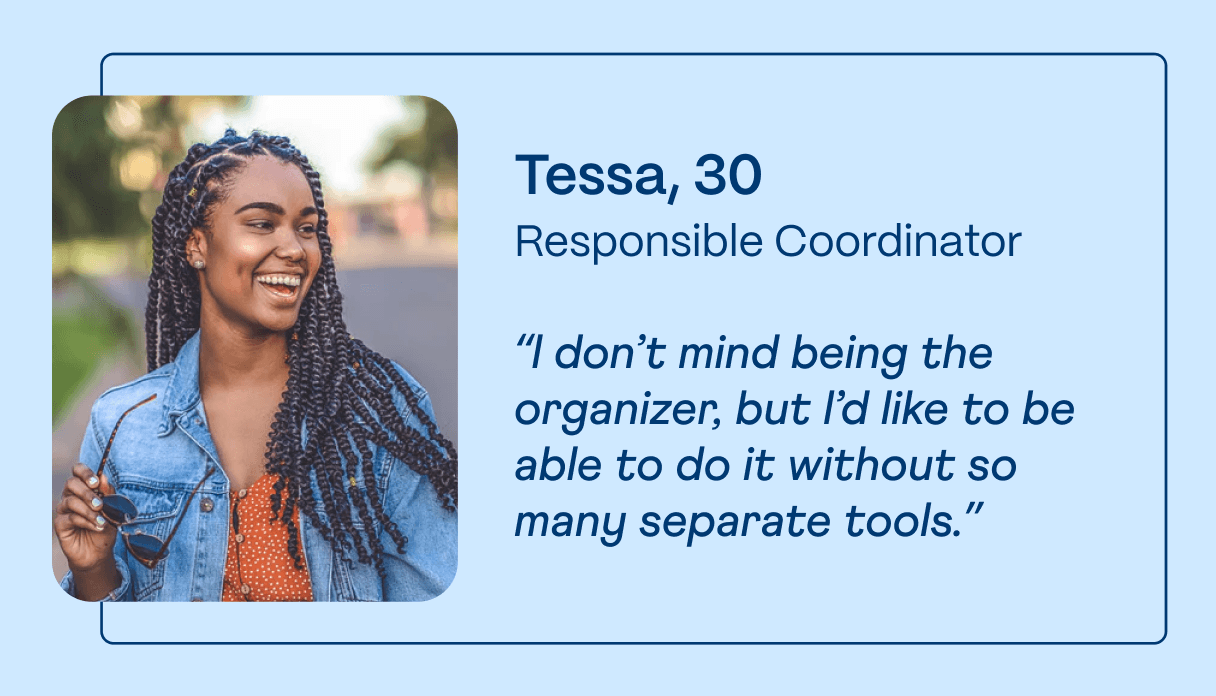
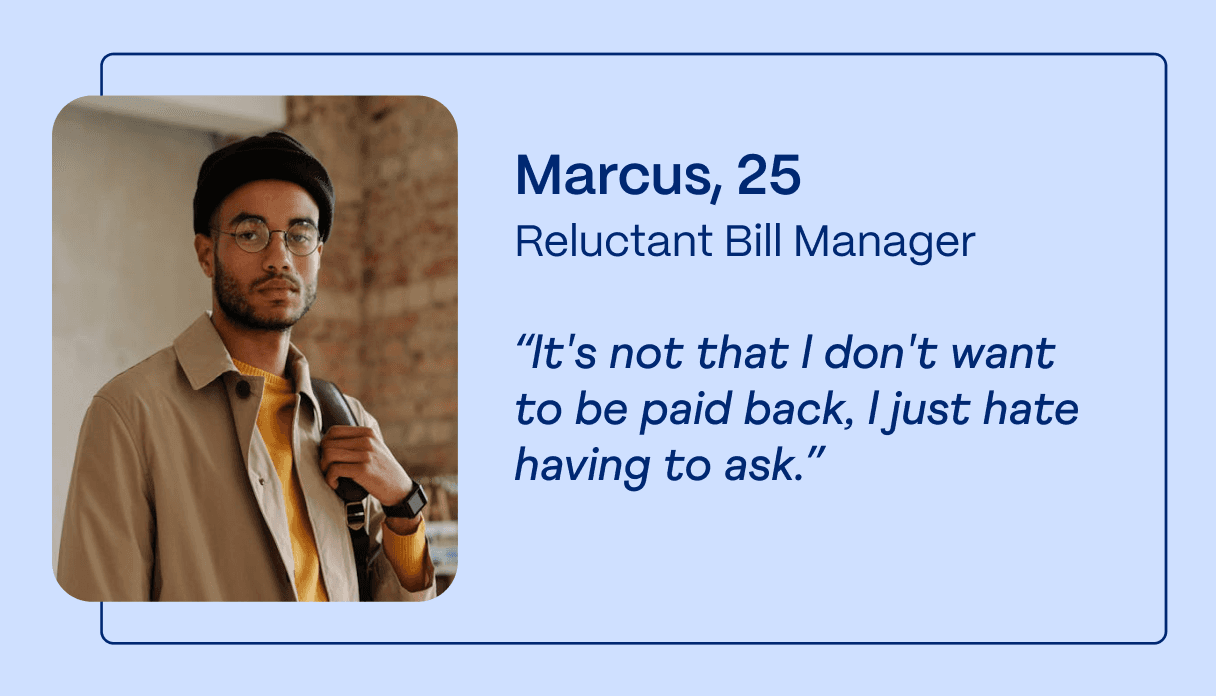
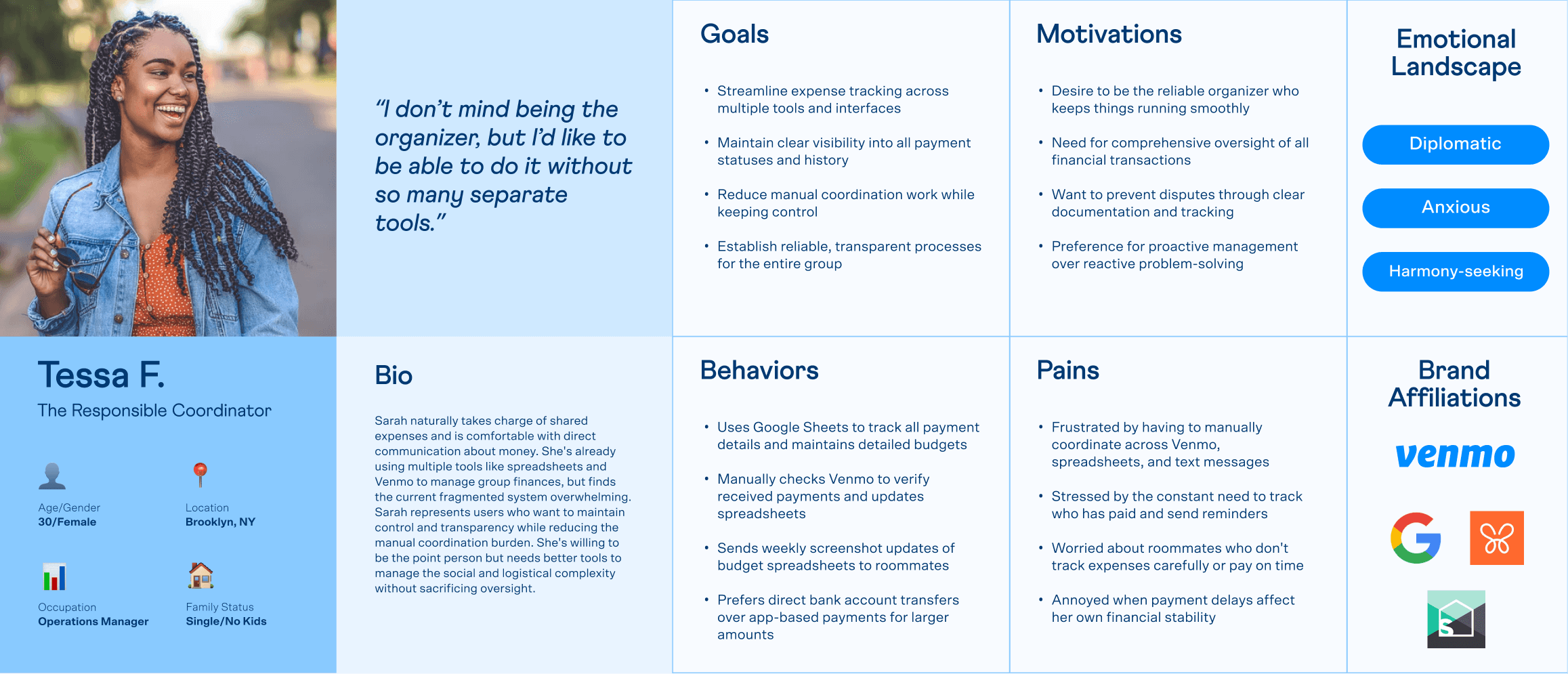
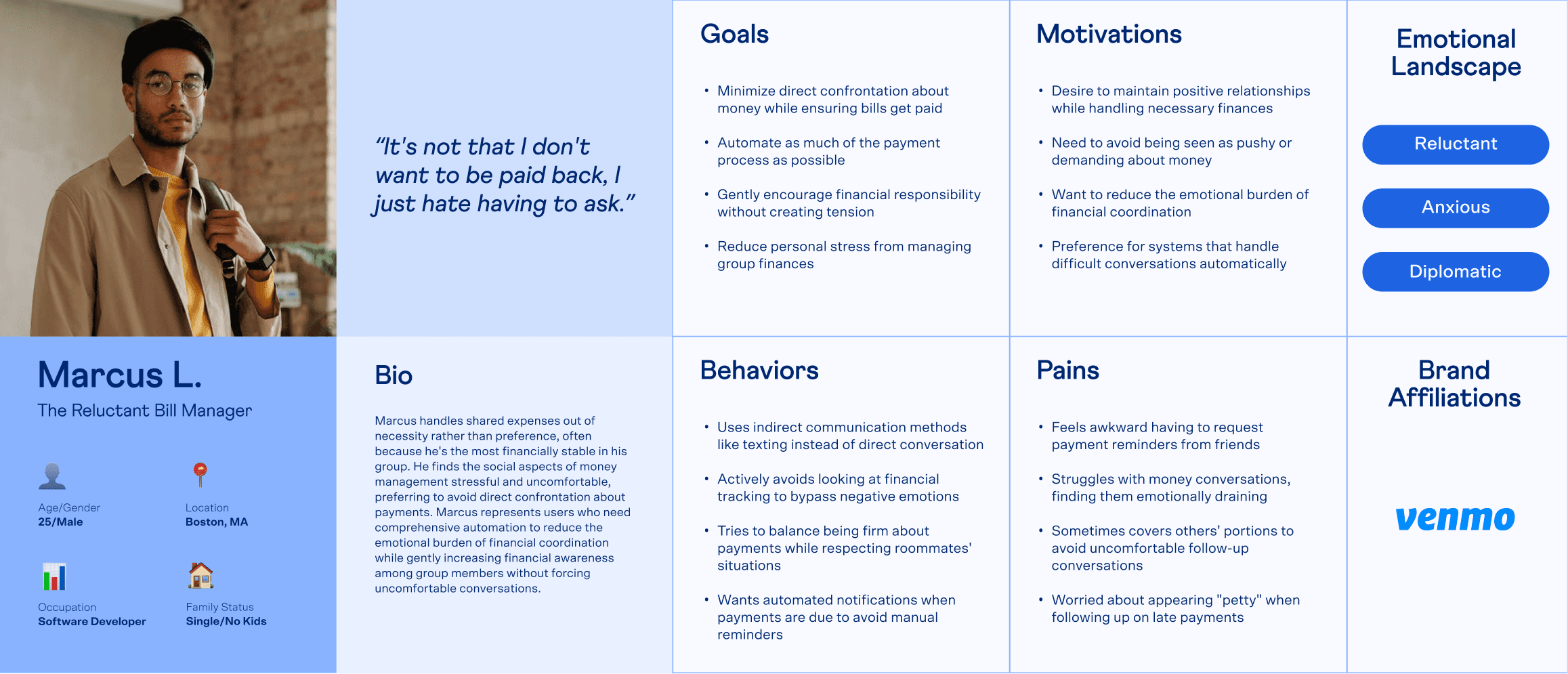
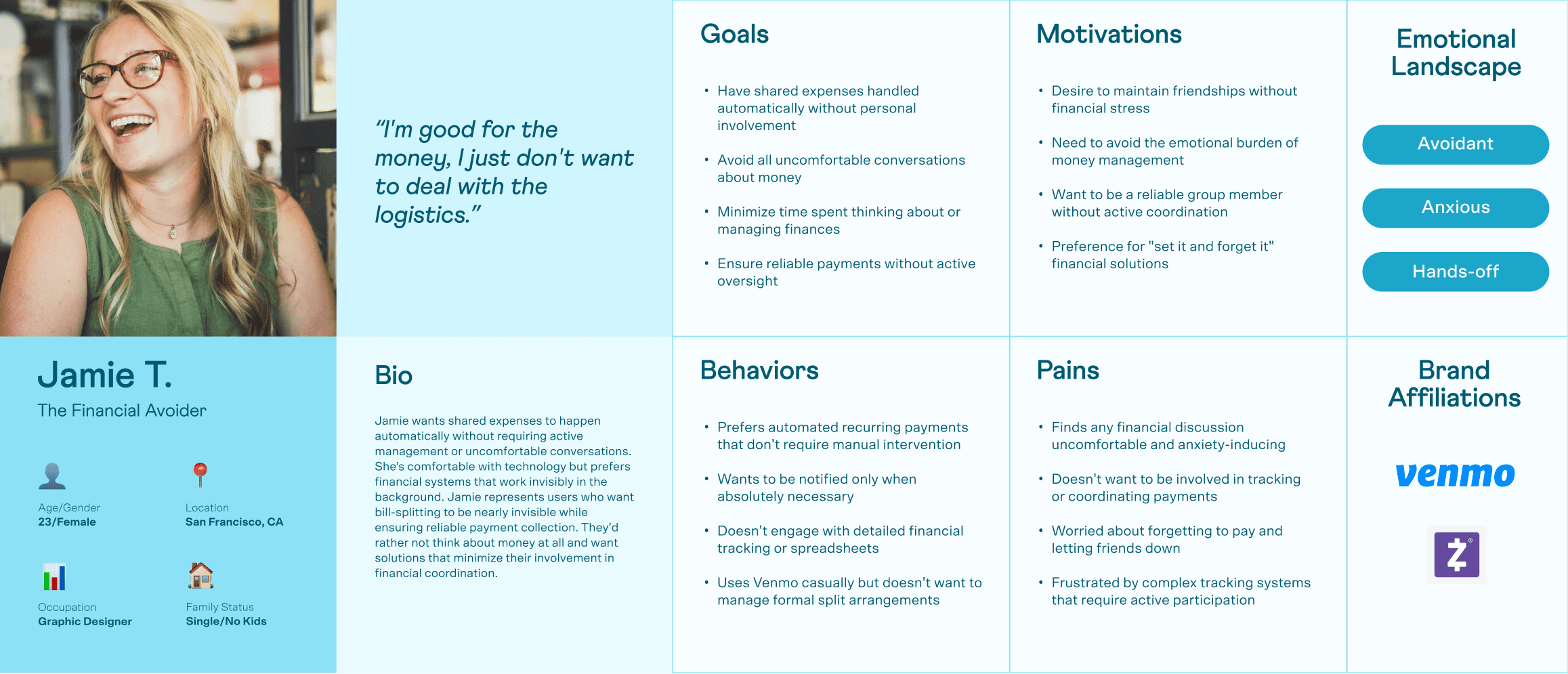
The research revealed three distinct approaches to managing shared finances, each with different needs & pain points. I developed personas to represent these patterns:
Tessa F. - The Responsible Coordinator (Primary focus)
Naturally takes charge but finds manual coordination overwhelming
Wants reliable, transparent processes for the entire group
Marcus L. - The Reluctant Bill Manager
Handles shared expenses out of necessity, not preference
Avoids direct confrontation about payments
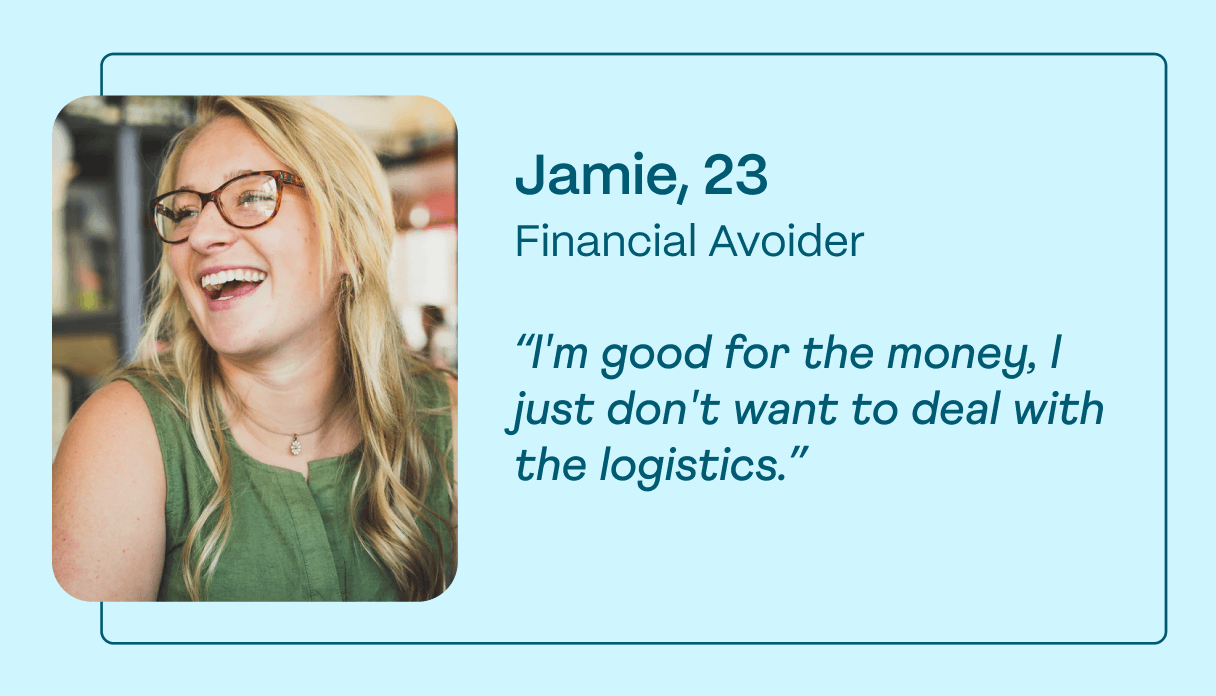
Jamie T. - The Financial Avoider
Prefers "set it & forget it" solutions
Avoids financial discussions & tracking
🧐
Design Decision
I focused on Tessa's experience as the group admin to examine Venmo's current flow for creating groups & explore what being a coordinator truly requires.
Designing for group members like Jamie would have required separate flows for receiving reminders & viewing payment status, which exceeded the project scope.
05 - Mapping the current experience
With a clear understanding of who I was designing for & the problems they faced, I turned my attention to mapping how Venmo's existing Groups feature currently works from Tessa's (Responsible Coordinator) perspective & where recurring expenses could fit in. The goal was identifying where automation & intelligent features could reduce friction.
Through this exercise, I noticed Venmo's current flow only offers one entry point to Groups, buried in the user profile. I had a feeling this might make it harder for them to access the feature, which would later be validated in user testing.
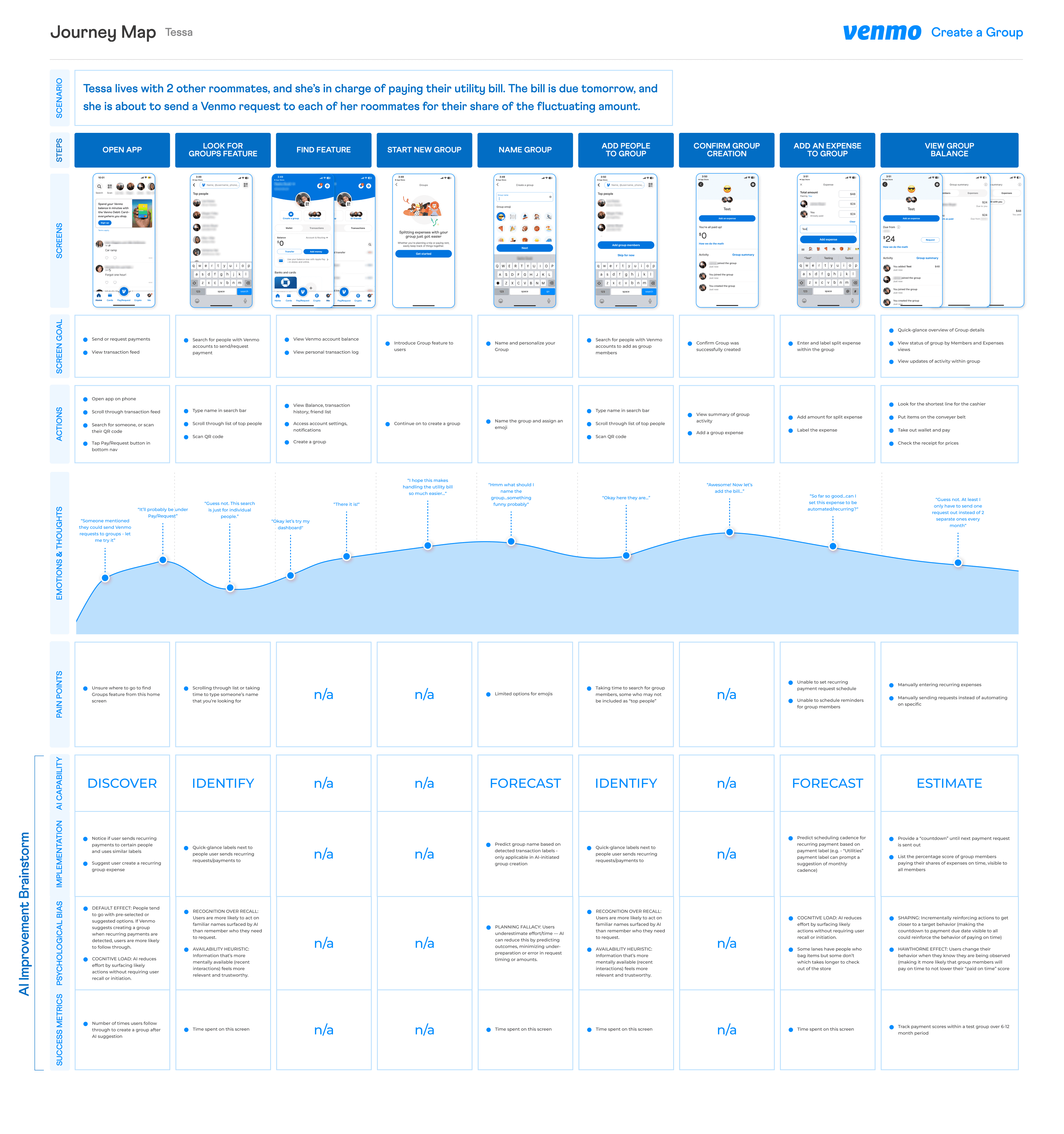
I also brainstormed potential AI enhancements, like detecting when users repeatedly send similar amounts to the same people & proactively suggesting they create a recurring group expense. While I didn't design this feature due to time constraints, it pointed toward opportunities for Venmo to reduce manual effort through intelligent automation.
06 - Defining the user journey
With the existing structure mapped, I could now design Tessa's journey of creating a recurring split expense with a group. This flow also helped ensure the design stayed consistent with Venmo's existing information architecture.
07 - Testing early concepts
This flow became the blueprint for testing to validate whether the logic I'd created actually matched how people think about recurring group expenses.
I tested low-fidelity prototypes with 5 participants across 3 moderated tasks, focused on validating whether users could quickly move through creating a group & setting up a recurring split expense.
Parameters:
Tasks: (1) Create a new group (2) add a recurring expense within that group, and (3) modify the same expense after creation.
Success metrics: >50% participants rate each task as 'Easy' or 'Very Easy'
View full report
Misses
Beyond the specific usability issues, testing revealed a broader problem: the Groups feature itself suffers from poor discoverability. Better entry points & visual affordances could help users find & understand the feature before they even need to use recurring expenses. This insight would reshape my approach in the next iteration.
08 - Refining based on feedback
Rather than just fixing the editing flow, I needed to rethink how users discover & access Groups in the first place. I made several changes when transitioning to high-fidelity, including a few key fixes:
Added entry points to Groups via Pay/Request Button & Search flows
Increased Edit button visibility
Rearranged elements on Group dashboard to reinforce visual hierarchy of Expenses existing inside of a Group. Also redesigned the Expense card to include a chevron that affords tapping
09 - High-fidelity validation
With my refined screens, I tested high-fidelity prototypes with 5 new participants using the same 3 tasks to validate if I'd made the Groups feature easier to find & expenses easier to revise. This time, results were dramatically different: all tasks were successful, with significant improvements in visual hierarchy & feature discoverability.
Parameters:
Tasks: (1) Create a new group (2) add a recurring expense within that group, and (3) modify the same expense after creation.
Success metrics: >50% participants rate each task as 'Easy' or 'Very Easy'
This validated my decision to add multiple entry points for Groups. Users' mental models don't match Venmo's architecture, & forcing them into a single "correct" path creates unnecessary friction. The data also revealed that almost none of the participants had used the Groups feature before this test. This wasn't just a minor discoverability issue, it was a fundamental problem with how Venmo positions & surfaces this feature.
10 - Final refinements
Based on this feedback, I made adjustments that would further support users' natural mental models around a people-first approach.
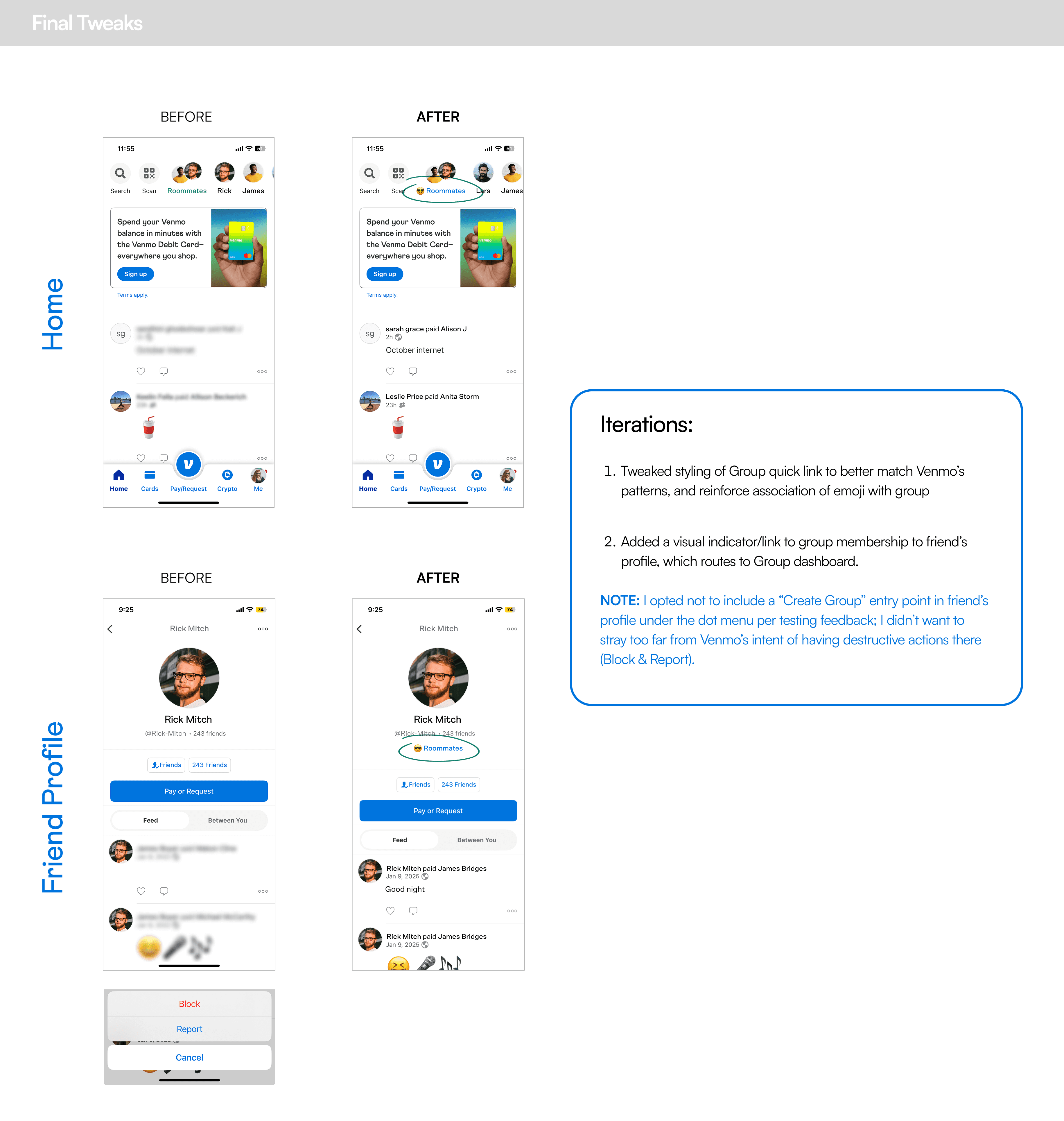
11 - Solving social friction while unlocking Groups feature's full potential
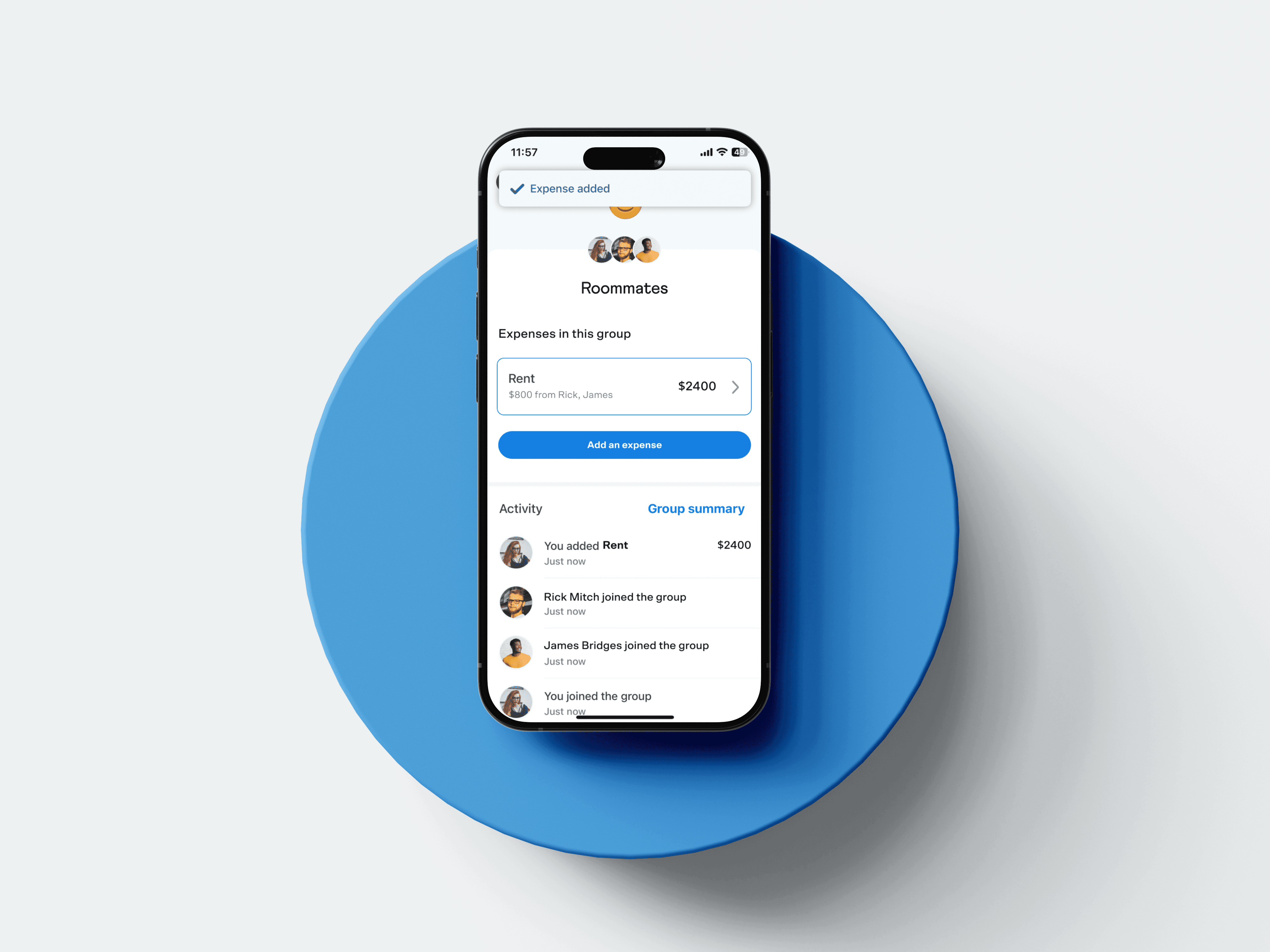
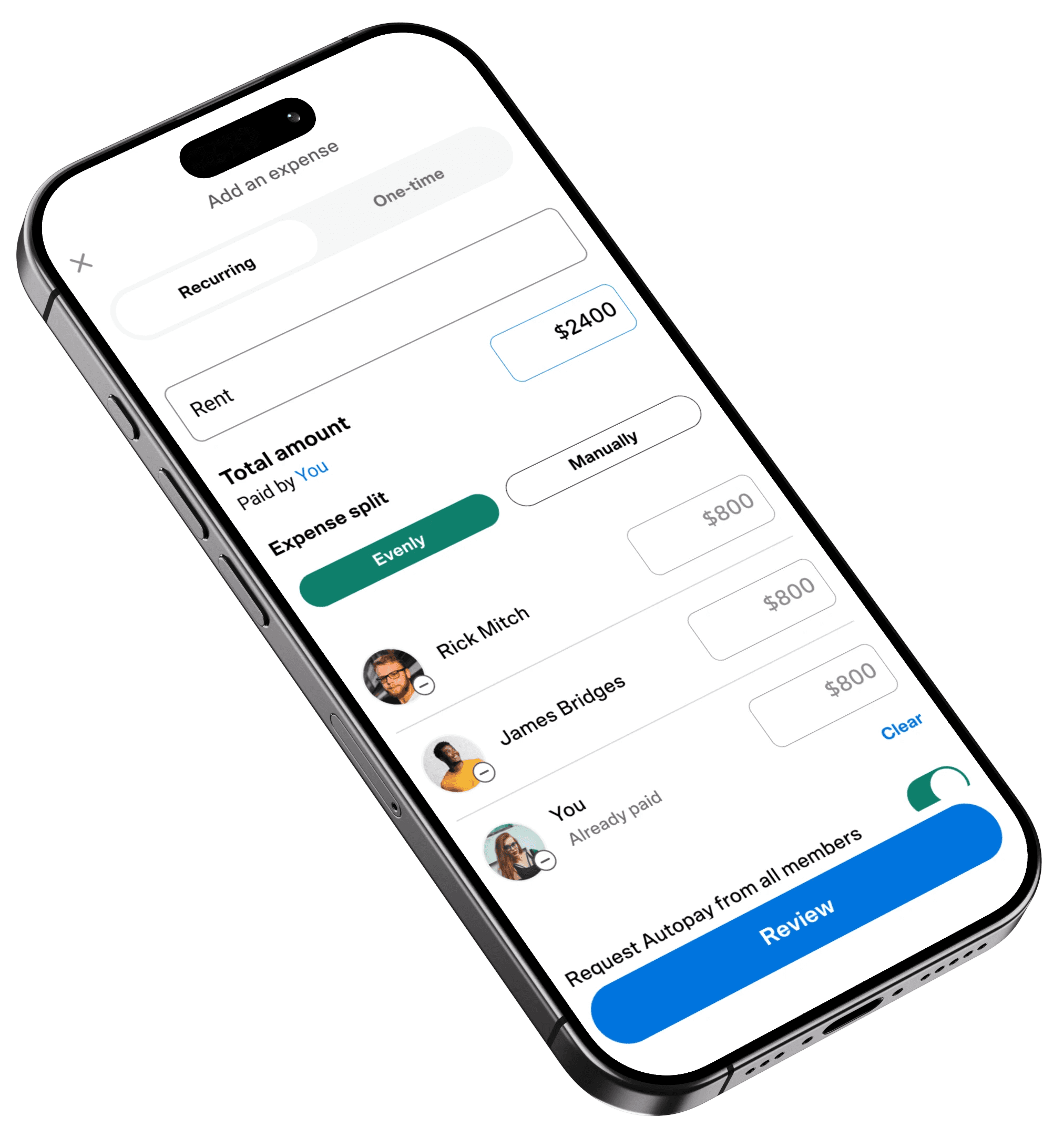
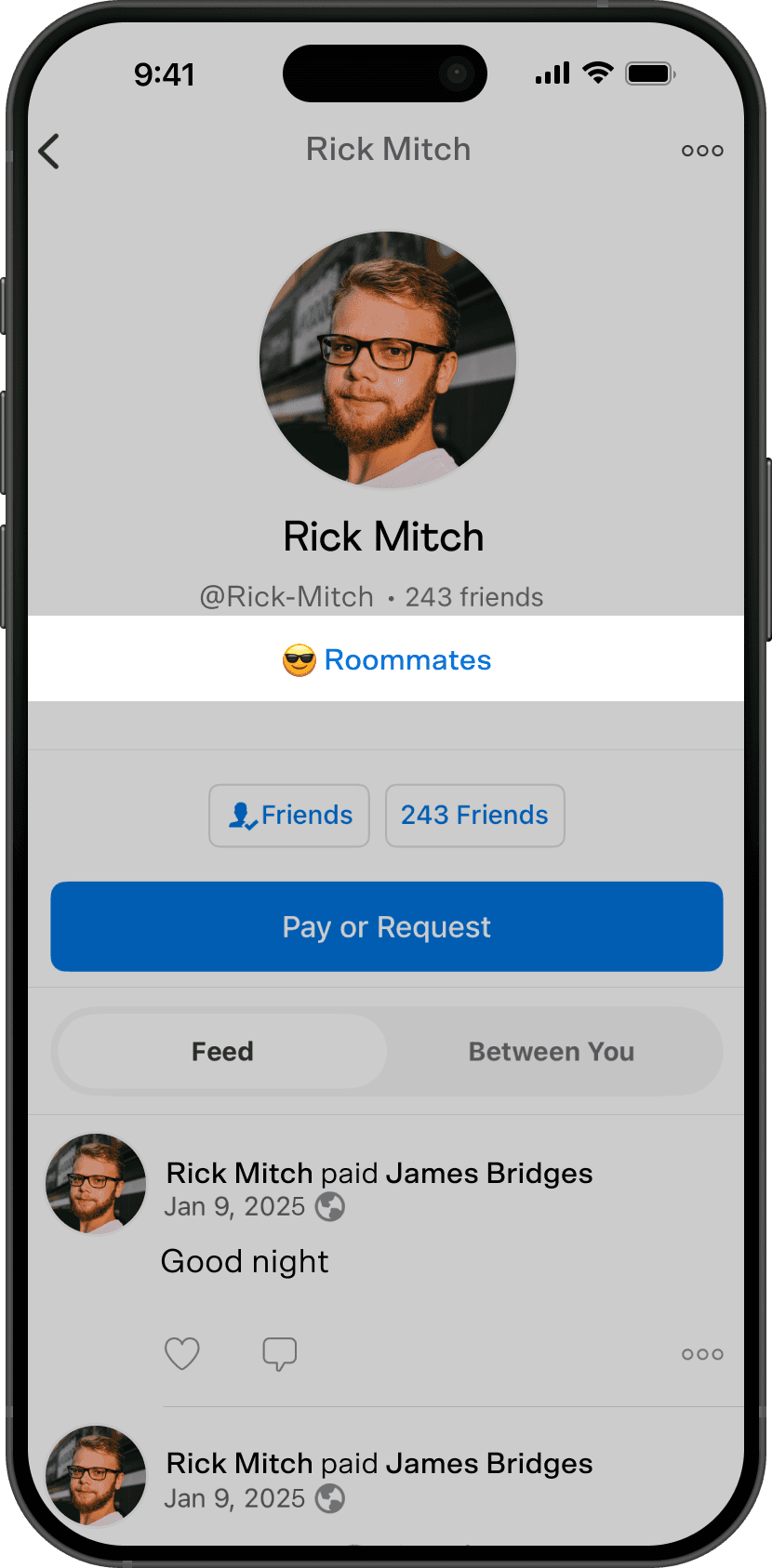
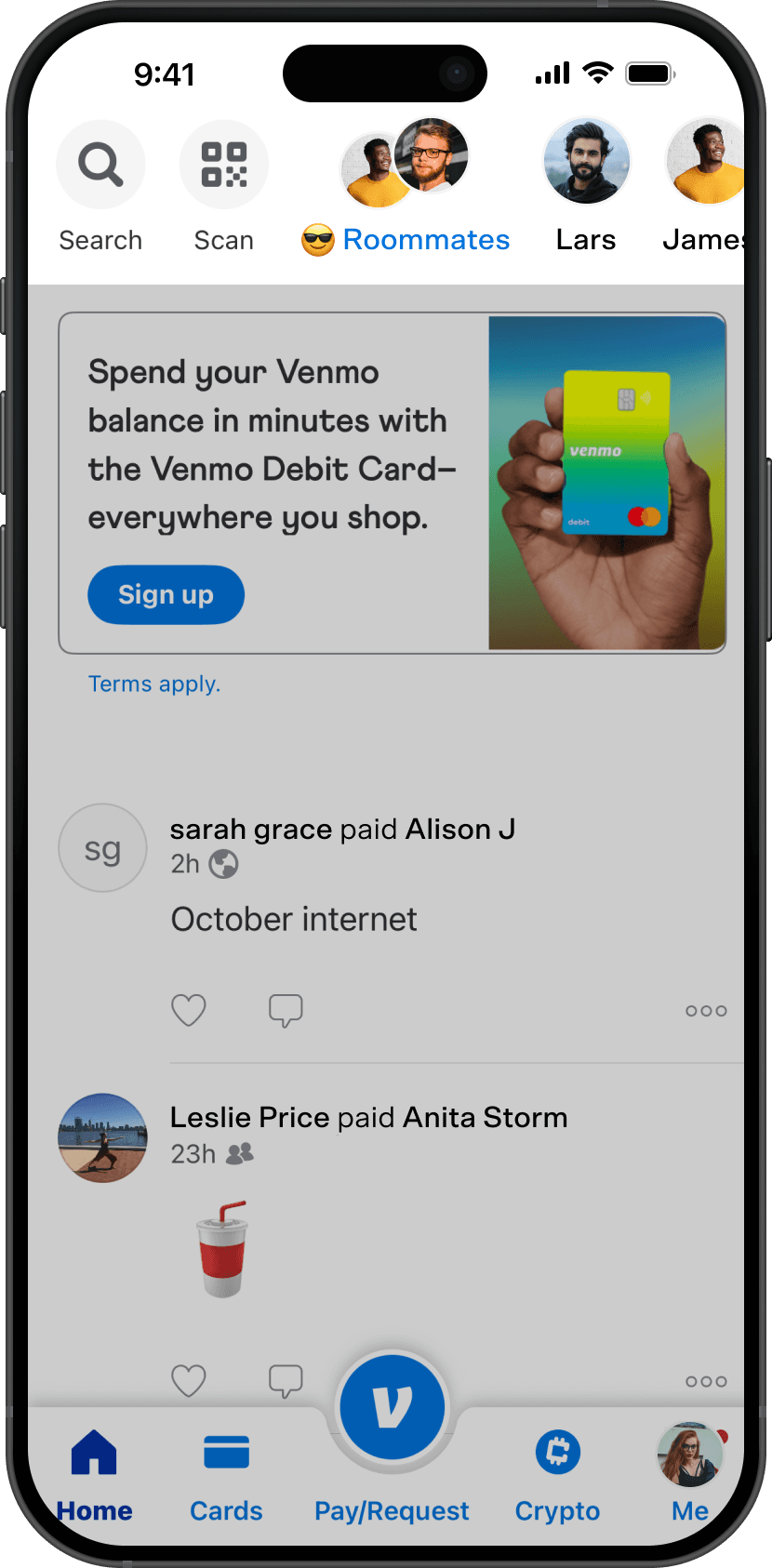
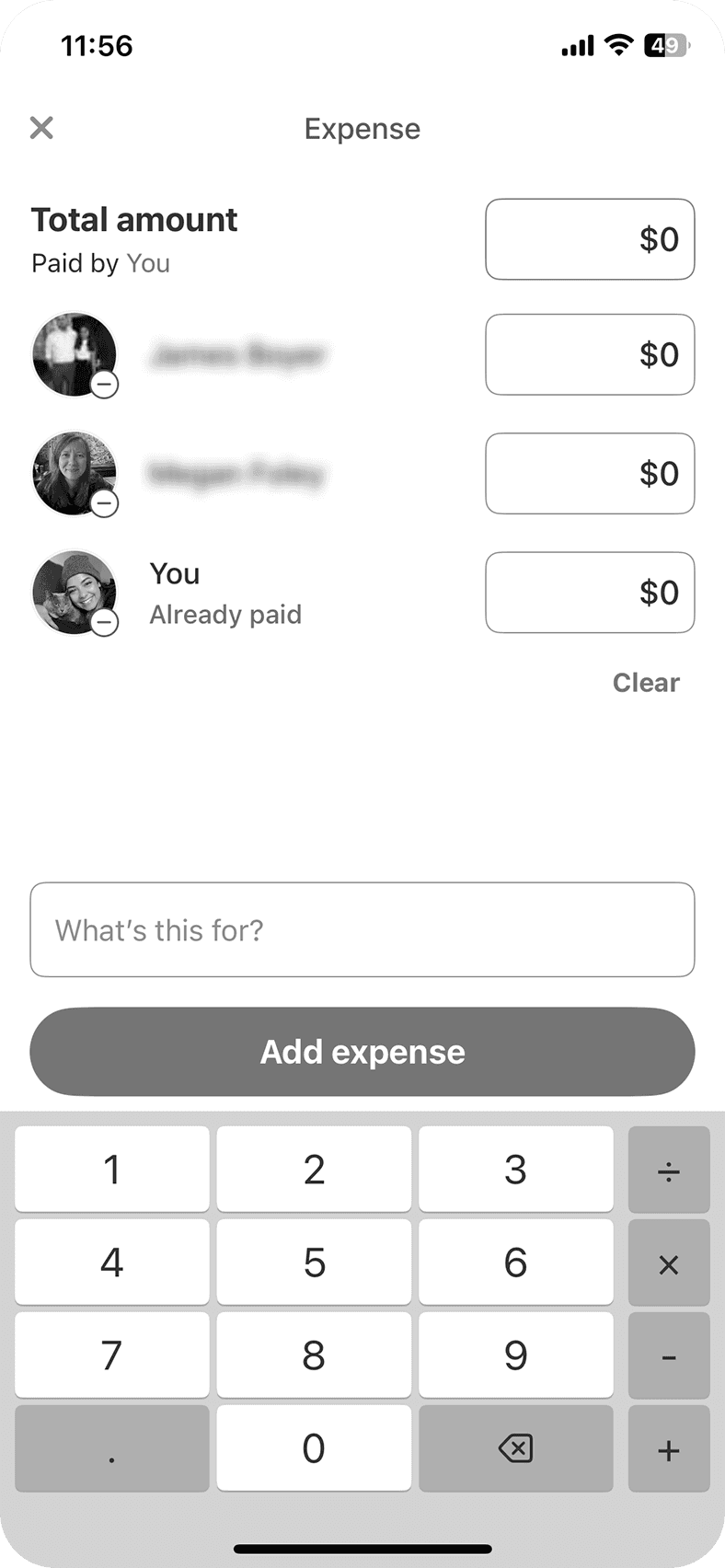
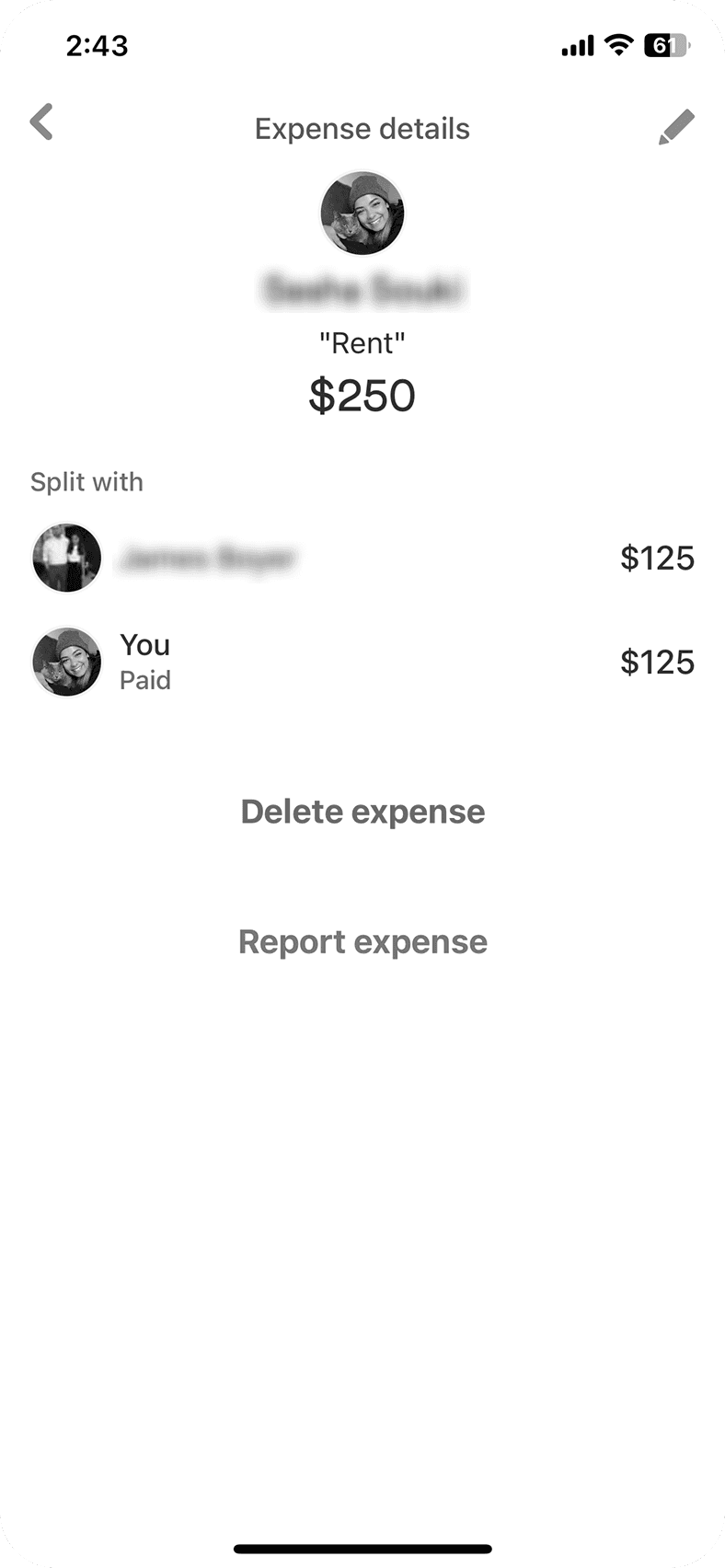
The final design centers on 4 key features, each addressing a specific aspect of the social friction & logistical burden identified in research:
12- Measuring success
If this feature launched, I would track metrics that directly connect to the problem I set out to solve: making recurring shared expenses less stressful & more automatic, while helping more users discover & benefit from the Groups feature.
01 - Reduce Social Friction
% of group payments completed by due date (recurring vs one-time)
Autopay adoption rate among group members
02 - Feature Adoption
Number of new Groups created specifically for recurring expenses (vs one-time splits)
03 - Improving Discoverability
% of users who find Groups feature through new entry points vs original Profile path
13- Hindsights
Looking back on this project, several insights emerged that challenged my assumptions & will inform how I approach similar problems in the future.
Design for emotion, not just function. Participants' anxiety & relationship concerns directly informed what I built.
Support multiple mental models. Testing showed 80% of participants found Groups through new entry points instead of Venmo's only existing path. Rather than forcing one "correct" approach, I designed for how people naturally think.
Discoverability is critical. Only one person in my tests had used the Groups feature before. Even the best design is useless if users can't find it. Features should live near the context of their use.
Test early & often. Low-fidelity testing revealed confusion I never predicted. High-fidelity testing showed users' mental models directly contradicted Venmo's intended path. Both rounds were essential.
Ultimately, this project reinforced a fundamental truth: splitting recurring expenses with friends shouldn't strain friendships. By automating reminders, providing transparency through a shared dashboard, & meeting users where their mental models live, this new addition to the Groups feature reduces the awkwardness & mental burden that currently plague split bills. The solution is about making payments easier, but more importantly preserving relationships while handling the practical realities of shared living.
View the next project: